
AI Agents in Expense Management: What Each One Actually Does
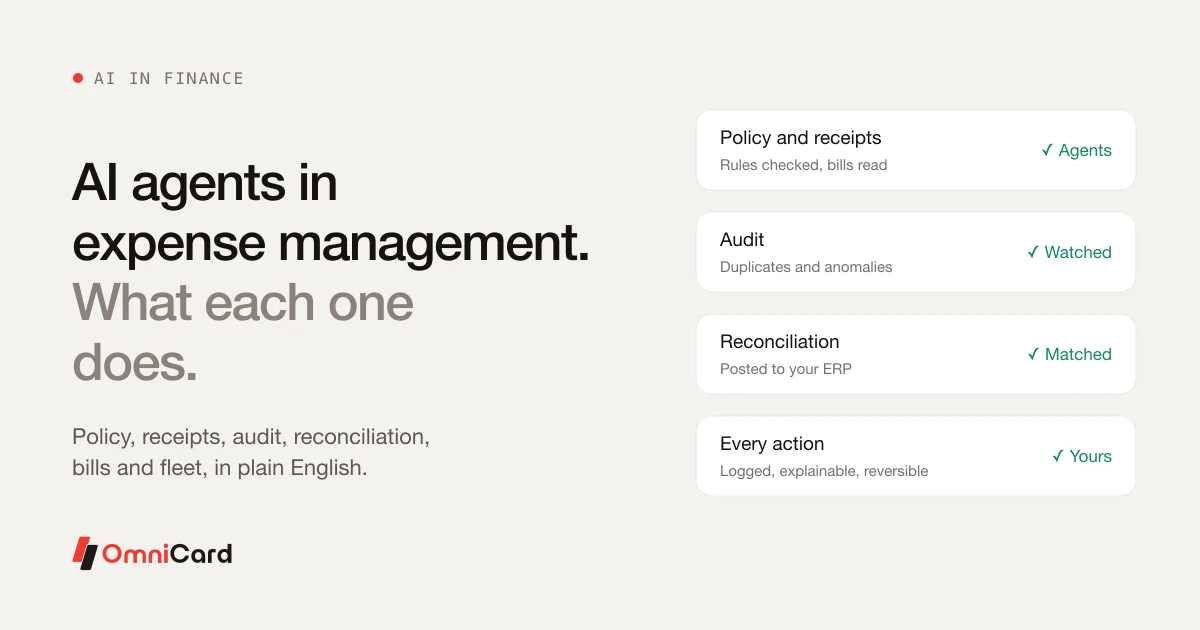
AI in expense management can sound vague. It helps to break it into the specific jobs it does, and to ask for each one: what does it decide, and who can overrule it?
Policy
Checks a payment against your rules, such as limits by category, merchant, location and time.
Receipts (OCR)
Reads the bill: amount, date, vendor and tax details, so nobody has to type them.
Audit
Looks for duplicates and anomalies in payments.
Reconciliation
Matches payments to your records and posts to the ERP.
Bills
Handles autopay of utility and other bills across branches.
Fleet
Tops up FASTag and tracks tolls per vehicle.
What to ask any vendor
Is every AI action logged? Can it be explained? Can your finance team reverse it?
How OmniCard fits
OmniCard has agents for each of these jobs: Policy, Receipt/OCR, Audit (duplicates, anomalies), Reconciliation (ERP posting), Bills (BBPS autopay across branches) and Fleet (FASTag top-ups, tolls per vehicle). Every AI action is logged, explainable and reversible by the finance team.
Related: Expense management
Keep reading
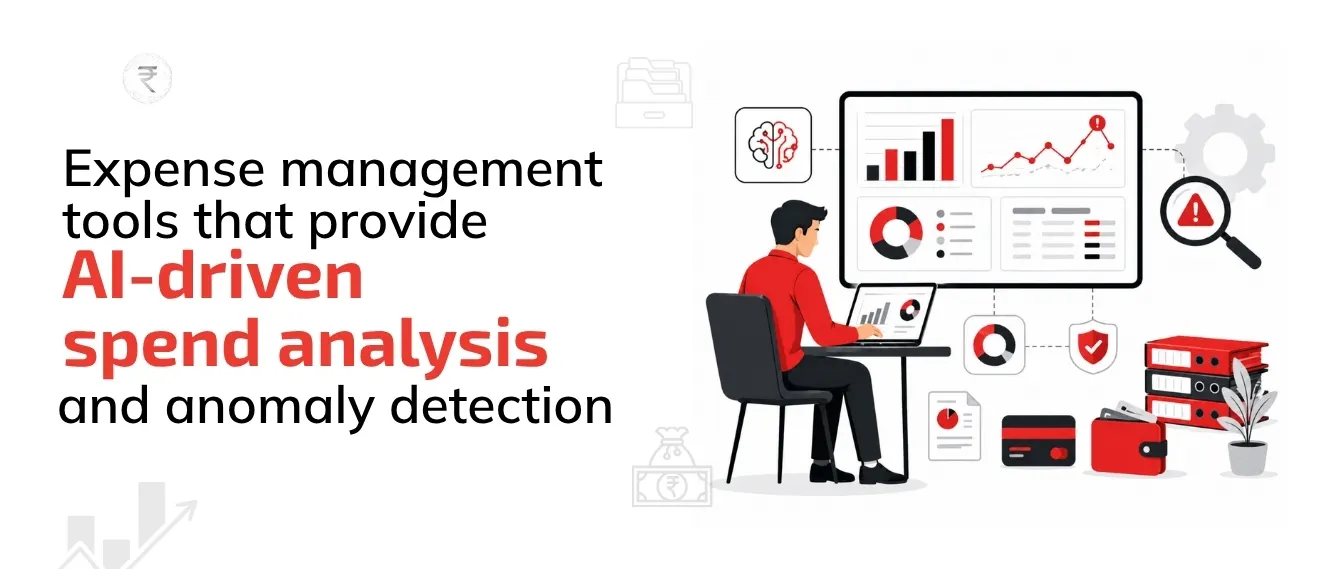
Are there expense management tools that provide AI-driven spend analysis and anomaly detection for Indian companies
Expense Management Transformation in Modern Banking Institutions
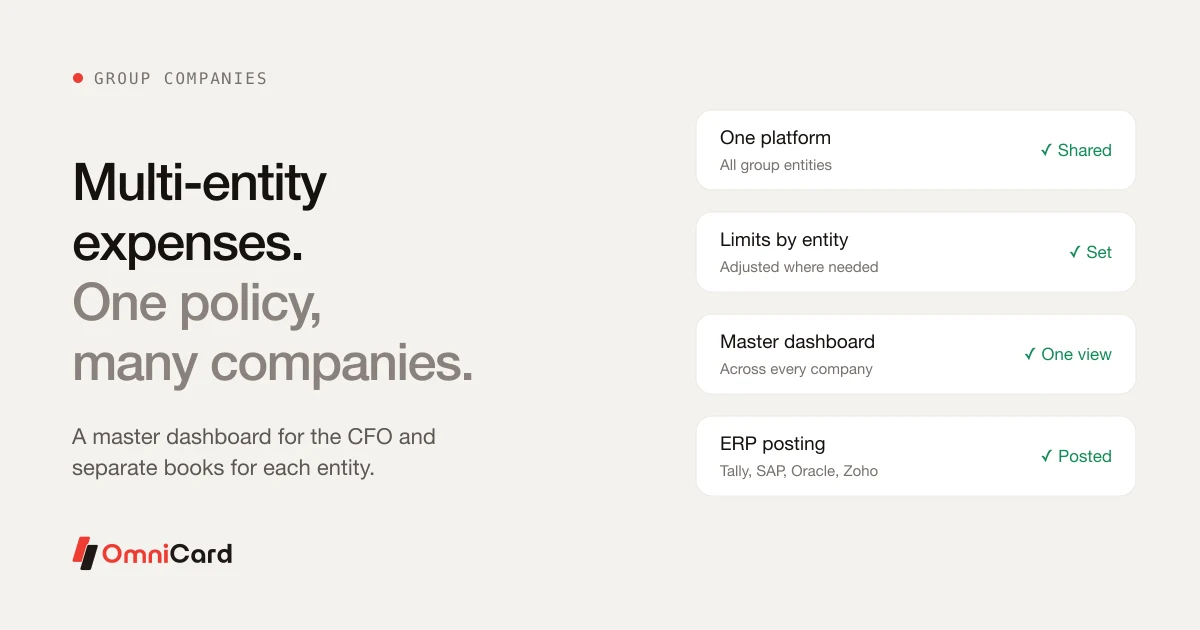
Multi-Entity Expense Management: One Policy Across Group Companies
End-to-End Expense Management: What CFOs Actually Need
How Much Can You Actually Save with an Expense Management Platform