
Restaurant Petty Cash Management: A Simple Daily Process
A restaurant spends small amounts all day: gas cylinders, last-minute vegetables, ice, courier charges, a plumber's call-out. Most of it is paid in cash, often by whoever is on shift. That is why petty cash is where restaurants lose track of money fastest.
A simple daily routine fixes most of it.
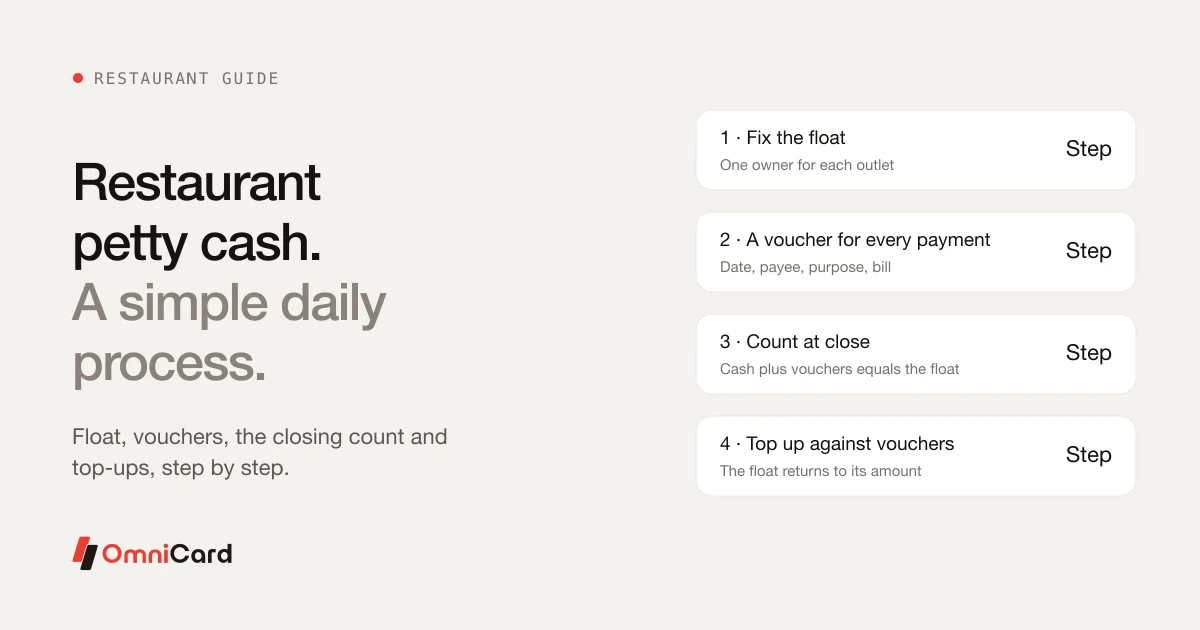
1. Fix the float and the owner
Decide a float amount for each outlet and name one person responsible for it. Everyone else asks that person for cash. When two people dip into the same box, nobody can say who spent what.
2. Decide what petty cash may pay for
Write a short list: small purchases that cannot wait for the regular supplier. Anything large or regular, such as rent, salaries or the main produce order, is paid another way. Keep the list on the wall next to the box.
3. One voucher for every payment
Every payment out gets a numbered voucher with the date, payee, purpose and amount, plus the bill. If there is no bill, write the reason on the voucher. See how to fill a petty cash voucher.
4. Count the box at close
At close, count the cash and add up the vouchers. Cash plus vouchers should equal the float. Write down any difference and its reason, even a small one, and have the outlet manager sign.
5. Top up against vouchers
Refill the float for exactly the amount of the vouchers. This is the imprest system: the float always returns to the same amount, and the vouchers explain every rupee that left.
6. Post to the books weekly, not monthly
Enter the vouchers in the petty cash book every week. Waiting until month-end is how missing bills and forgotten payments turn into guesswork.
What goes wrong most often
- Bills with no date or supplier name
- One voucher covering several different purchases
- "Miscellaneous" used as a purpose
- Top-ups made from the till, which hides the real cash position
- Nobody checking the box except the person who uses it
Reducing cash altogether
Cash handling is the weak point. OmniCard lets outlets pay small expenses by UPI or RuPay card from company funds instead of from a cash box. Each payment is captured the moment it is paid: who, where, what for and against which policy, and limits by employee, category, merchant, location and time are checked before the money moves. OmniCard is used by 1,000+ businesses, from 700-store QSR chains to NBFCs with 5,000 branches.
Keep reading

Retail Management: How to Manage Petty Cash Expenses in Retail
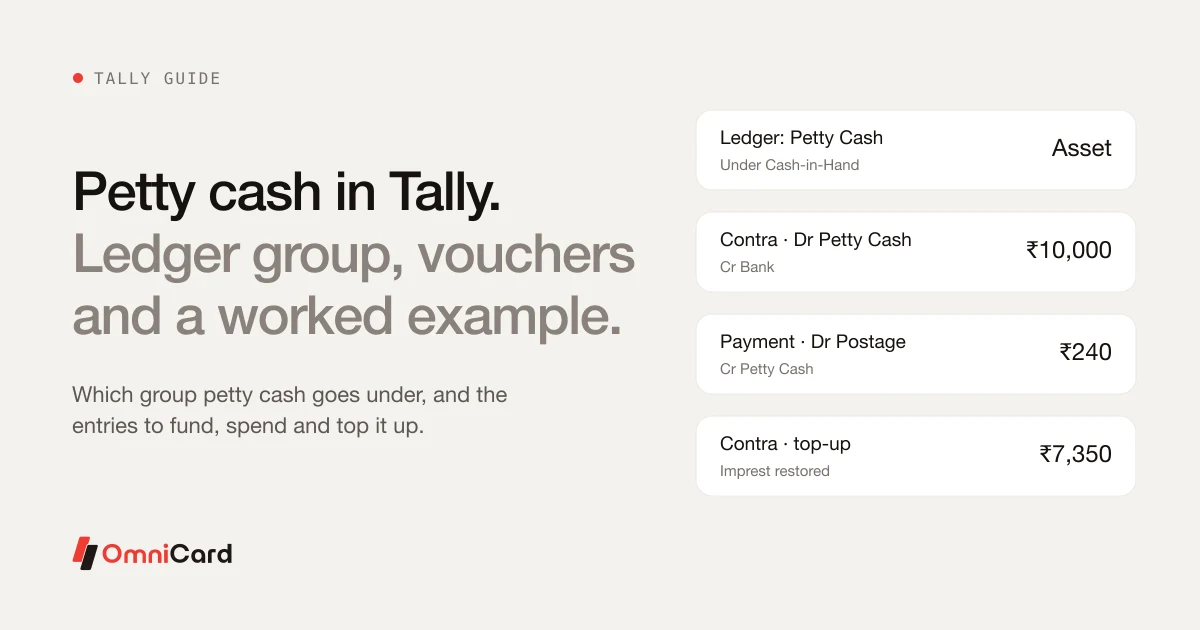
Petty Cash Entry in Tally: Ledger Group and Journal Entries
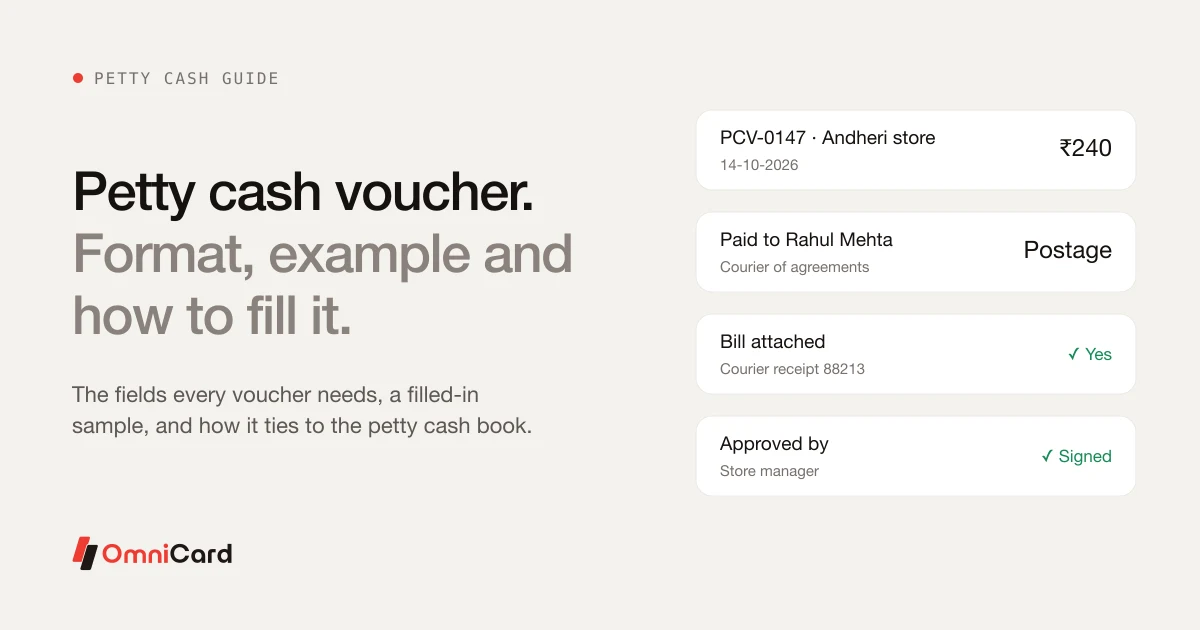
Petty Cash Voucher: Format, Example and How to Fill It

Petty Cash Book: Meaning, Format, Example and Advantages
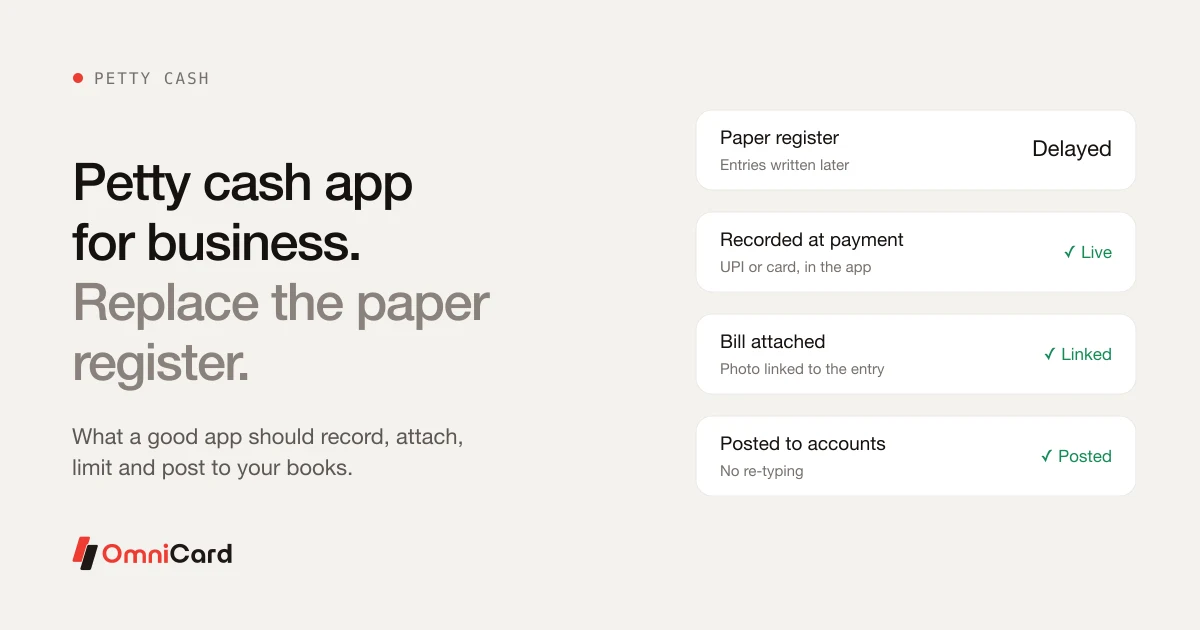
Petty Cash App for Business: Replacing the Paper Register