We’re a logistics company with many drivers. What’s the best way to manage fuel, toll, and en-route expenses without leakage
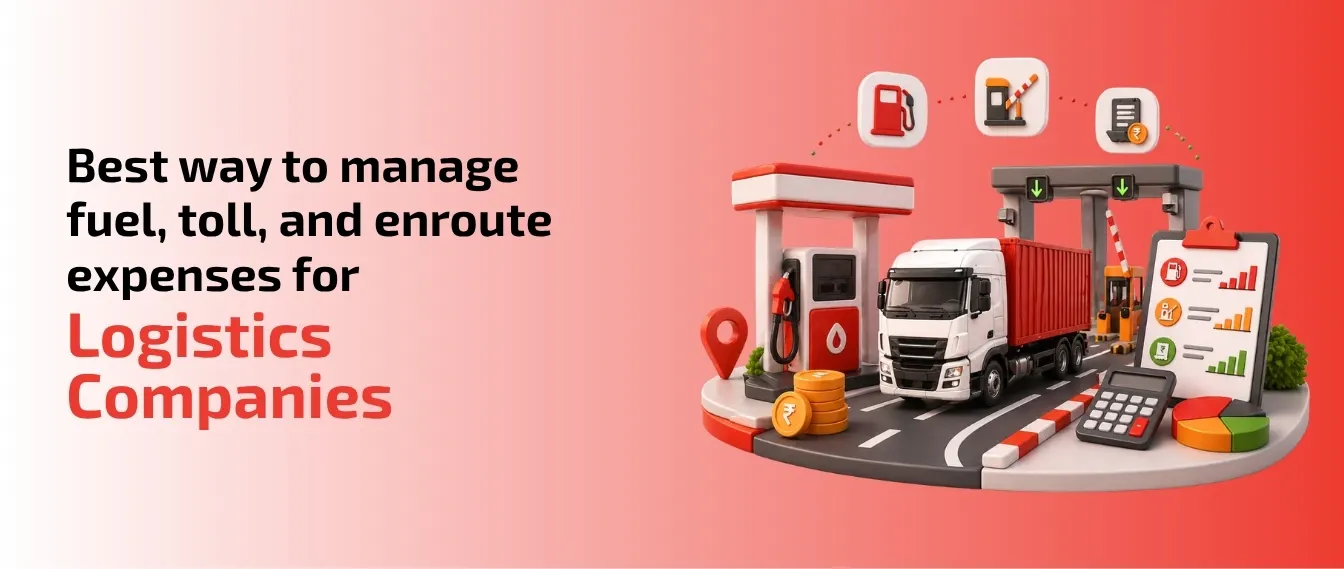
Running a logistics business in India often feels like carrying water in a bucket full of tiny holes. You start a delivery route with a healthy profit margin, but by the time the truck returns, revenue has quietly vanished at petrol pumps and highway checkpoints. This silent profit drain—better known as operational leakage—happens whenever unmonitored spending gradually erodes your hard-earned revenue. Whether it’s a fleet of ten or a thousand, the lack of a Business FinTech OS often leads to these untracked "micro-losses."

What to Expect From This Blog?
In this guide, we dive deep into the mechanics of supply chain cost management to help you secure your bottom line. You will learn:
How to identify and neutralize common fuel fraud patterns specific to Indian highways.
Strategies for automating toll reconciliation to save hours of administrative labor.
The role of smart fleet cards as "digital gatekeepers" for your business.
How to establish clear en-route expense policies that empower drivers while preventing petty cash leakage.
A step-by-step roadmap to implementing a leak-proof logistics expense management system.

The True Cost of Operational Leakage
According to industry averages, this invisible waste typically costs Indian companies 3% to 5% of their total revenue. Rather than malicious theft, these losses usually stem from the three pillars of logistics waste: excess fuel consumption, untracked tolls, and incidental daily purchases.
Mastering cost reduction logistics means managing fuel, toll, and en-route driver expenses without leakage, ultimately stopping this slow drip of cash. Relying on manual tracking creates a massive administrative burden that frustrates both drivers and back-office staff. Fixing this problem requires replacing outdated guesswork with simple, transparent systems—like a unified dashboard—that protect your revenue.
Identifying Common Fuel Fraud Patterns: How to Spot Siphoning and Card Misuse
Every time a fleet vehicle stops at the pump, you risk paying for more than just the scheduled route. Sometimes waste is innocent, like excessive idling—a habit easily burning Rs. 2,50,000 a year per truck. Other times, losses are deliberate.
Fuel Siphoning: Physically draining diesel from the tank during overnight halts.
Card Skimming: Use of devices on pumps to steal payment details for unauthorized use.
Ghost Transactions: Processing charges for fuel while the truck is actually miles away.
Ad-hoc Cash Requests: Drivers asking for more cash than required due to "price hikes" that haven't occurred.
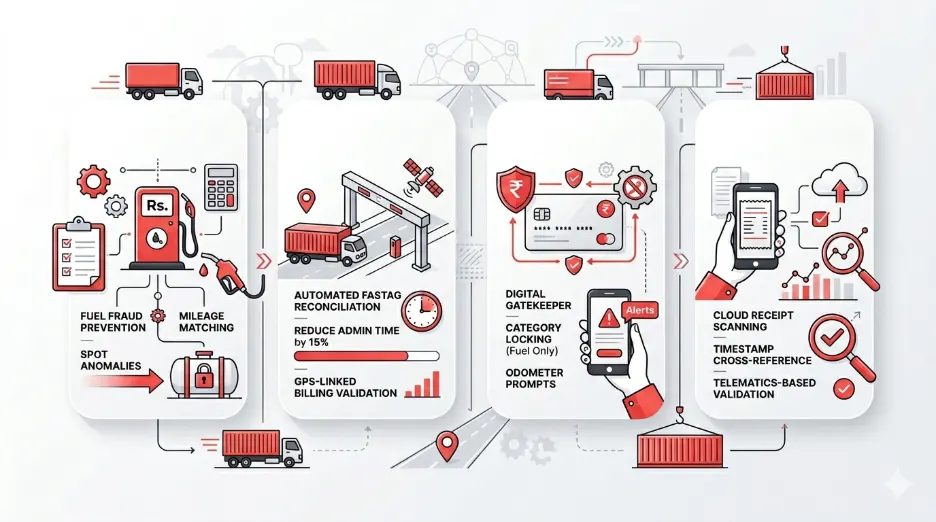
Learning how to prevent fuel theft starts with basic math. A consistent fuel card reconciliation process lets you spot the difference between legitimate fuel use and theft. By implementing a cross-check between kilometers driven and liters purchased, you can identify:
Mileage vs. Volume Mismatch: If a truck's average mileage drops significantly on a specific route without reason.
Suspicious Timestamps: Late-night fuel station locations that don't align with the transit schedule.
Frequent "Small" Fill-ups: Multiple small transactions designed to stay under the radar of management alerts.
Why Toll Reconciliation Fails and How Automation Saves 15% on Admin Time
Deciphering physical toll receipts at the end of the month creates a frustrating lost-receipt dilemma. In India, with the implementation of FASTag, the problem has shifted from "missing receipts" to "mysterious deductions."
The Manual Burden: Managers often choose between reimbursing undocumented expenses or penalizing honest drivers.
Double Billing: Comparing paper stubs or SMS alerts to scheduled routes often reveals double-paying for tolls due to system errors.
Integration Gaps: Without integrated logistics expense management, catching these billing errors feels nearly impossible.
The modern fix relies on automated toll payment systems that communicate seamlessly with your tracking tools. This introduces GPS-linked billing validation—a digital check that verifies a vehicle's exact location against the toll plaza's timestamp.
By letting a platform like OmniCard handle these validations instantly, businesses can:
Reduce Admin Hours: Save up to 15% of weekly office time spent on manual tallying.
Verify Route Adherence: Ensure drivers are taking the pre-approved, toll-optimized routes.
Instant Top-ups: Prevent trucks from being stuck at plazas due to low FASTag balances, which leads to "emergency" cash spending.
Using Fleet Cards as a "Digital Gatekeeper" to Block Ghost Transactions
Handing a standard corporate credit card or a stack of cash to a driver is a recipe for budget overruns. While traditional cards allow purchases anywhere, comparing fleet expense management software vs. manual tracking reveals a much smarter approach.
Modern specialized cards act as a "digital gatekeeper," serving as an automated auditor that oversees every single swipe. With OmniCard, you can configure these controls to reject non-approved items before a single paisa is actually spent.
Key Features of a Secure Fleet Card:
Category Restrictions: Limits spending exclusively to fuel, oil, or tolls, actively blocking inside-store purchases for snacks or personal items.
Odometer Prompts: Systems can be set to require accurate mileage entry before a transaction is authorized.
Real-Time Mobile Alerts: Maximizes real-time GPS monitoring benefits by flagging suspicious activity to the fleet manager immediately.
Dynamic Limits: Set daily or per-transaction limits that align with the specific route distance.
Because these smart systems validate everything up front, they completely automate data entry and remove costly human error from your accounting.
Establishing Simple Rules for En-Route Expenses to Eliminate Petty Cash Leakage
Even with fuel securely managed, drivers face daily incidental needs. Handing out envelopes of petty cash for a quick meal, overnight parking, or a minor truck fix often leads to missing change and faded receipts.
To solve this, companies must establish clear standard operating procedures (SOPs) for driver en-route expenses. When financial expectations are spelled out before the engine even starts, drivers know exactly what they can spend.
A Practical En-Route Expense Policy Includes:
Daily Meal Allowances: Set fixed Rs. limits that provide a fair meal allowance without overspending.
Pre-approved Parking: Ensuring vehicles use safe, cost-effective lots rather than paying exorbitant "convenience" fees on the fly.
Emergency Protocols: Specific contact steps for repairs to prevent unauthorized or inflated mechanic bills.
Digital Receipts: Using mobile apps to snap a photo of a parking ticket instantly. This speeds up driver reimbursement from weeks down to mere days.
Creating a Bulletproof Audit Trail: 5 Steps to Validate Long-Haul Allowances
Gathering digital receipts is just the first step; proving those purchases are legitimate is what actually protects your profits. A solid audit trail acts like a digital gatekeeper for your company. It proves money was spent properly, making tax season and GST filings completely stress-free.
The secret to catching hidden waste lies in telematics-based expense validation. You can compare real-time location against the exact moment a purchase occurs. If a card is swiped in Mumbai, but the truck's GPS shows it parked in Pune, this timestamp cross-referencing instantly flags the mismatch.
Best Practices for Supply Chain Cost Management:
GPS Verification: Match the transaction location to the gas station's physical coordinates.
Timestamp Alignment: Guarantee the purchase aligns with the driver's active duty hours.
Volume Cross-reference: Ensure the liters bought never exceed the truck's actual tank capacity.
Digital Image Validation: Ensure the uploaded receipt image is clear and belongs to the correct vendor.
Centralized Approval: Approve in a unified system to lock in an undeniable record of spending.
Tackling the Indirect Costs of Logistics
Beyond the pump and the toll booth, there are "soft costs" that contribute to leakage. These include:
Idle Assets: Trucks waiting for cash transfers to pay for repairs.
Driver Turnover: Frustration over delayed reimbursements leads to drivers leaving for competitors.
Compliance Risks: Inaccurate records leading to penalties during audits.
By utilizing a dedicated logistics expense management platform, you provide drivers with a reliable tool for their journey. This builds trust and reduces the "side-hustle" mentality that often leads to minor theft. When drivers are empowered with a card that works everywhere but is governed by smart rules, the entire operation moves faster.
Transforming Your Bottom Line: A Step-by-Step Roadmap
The "silent thief" of hidden costs no longer has to drain your profits. You now have the tools to transform a leaky bucket into a streamlined operation. By abandoning manual processes, you can capture that potential 5% increase in profit margins.
Your 30-Day Leak-Proof Plan:
Week 1: Audit existing fuel card and cash usage to identify where the biggest losses occur.
Week 2: Roll out a clear, digital-first expense policy to your drivers.
Week 3: Transition to automated, digital tolling and category-locked fleet cards.
Week 4: Review the first month of automated data to spot new cost reduction logistics opportunities.
Managing everyday costs is no longer about policing your team—it is about empowering them. When you replace guesswork with automated truth through a Business FinTech OS like OmniCard, both the business owner and the driver win.
Key Takeaways
Leakage is avoidable: Operational leakage typically costs 3-5% of revenue but can be mitigated with digital tracking.
Automation is king: Automated toll and fuel reconciliation save 15% of administrative time.
Control is subtle: Use "digital gatekeepers" like category-locked cards to prevent "inside-store" or "ghost" transactions.
Data brings transparency: Cross-referencing GPS data with transaction timestamps eliminates unauthorized spending.
Empowerment over Policing: Clear SOPs and instant digital reimbursements improve driver satisfaction and retention.
FAQs
Q: How does a fleet card differ from a regular corporate credit card?
A: Unlike a regular card, a fleet card allows for "category locking." This means you can restrict it so it only works at petrol pumps or toll plazas, preventing it from being used for personal shopping or unrelated expenses.
Q: Can I manage fuel expenses for vehicles that don't have built-in telematics?
A: Yes. By using a platform that combines a mobile app with a fleet card, drivers can input odometer readings at the time of purchase, providing a manual but digital audit trail.
Q: What is the best way to handle emergency repairs on the road?
A: Setting up an emergency limit on a digital card is best. You can keep the card's limit low for daily use and instantly increase it via a dashboard when the driver reports a breakdown, ensuring they aren't carrying large amounts of cash.
Q: How does digital expense management help with GST?
A: Digital systems like OmniCard automatically categorize and store receipts. This makes it significantly easier to claim input tax credits (ITC) on fuel and services, as all records are organized and verifiable.