Store Expense Management for QSR Chains With Many Outlets
With one restaurant, the owner sees every bill. With 50, 250 or 700 outlets, small daily spends become a finance problem: thousands of payments for repairs, supplies, courier, cleaning and local purchases, each made by a different store manager.
Why stores are hard to control
- Many small payments. Each one is minor; together they are a large part of store cost.
- Different people, different habits. Store managers handle spend in their own way.
- Delayed paperwork. Bills reach head office days or weeks later, if at all.
- Month-end surprises. Finance sees the spend after it has happened.
What good store expense control looks like
- A budget and limit per store. Each outlet knows what it can spend, by category.
- Payment at the point of purchase. The manager pays by UPI or card from company funds, not from a personal account or a cash box.
- Rules checked before payment. A restricted category or merchant is declined, instead of being flagged weeks later.
- Bill captured on the spot. A photo of the bill is linked to the payment.
- One view for head office. Spend by store, region, category and manager, without chasing spreadsheets.
- Automatic posting to accounts. Entries flow to Tally, SAP, Oracle, Zoho or Microsoft Dynamics without re-typing.
A real example
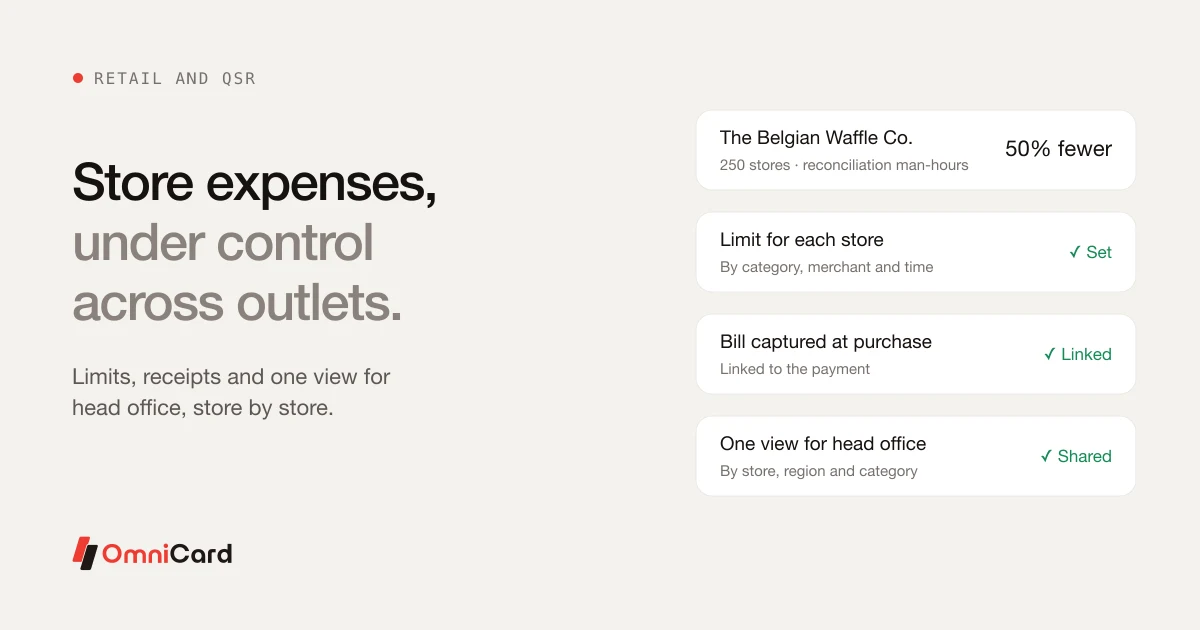
The Belgian Waffle Co. runs 250 stores on OmniCard and reports 50% fewer man-hours spent on reconciliation.
How OmniCard supports this
OmniCard captures every rupee that field staff, branches and stores spend, paid by UPI or RuPay card at the point of purchase: who, where, what for and against which policy. Rules are checked before the money moves, not at month-end. Limits can be set by employee, department, cost centre, category (MCC), merchant, location and time. Because OmniCard is itself an RBI-authorised PPI issuer and a direct NPCI issuer, with no sponsor bank in between, the check happens at the moment of authorisation.
Businesses on OmniCard can go live the same day. Pricing is a fixed fee covering all wallets or a flexible usage-based plan, with no load or reload charges on business wallets and no inactivity fee on business accounts.
Keep reading

Expense Management for Multi-Store Retail Businesses: A Strategic Guide
Expense Management for Non-Profits and Trusts
Expense Management for NBFCs With Large Branch Networks
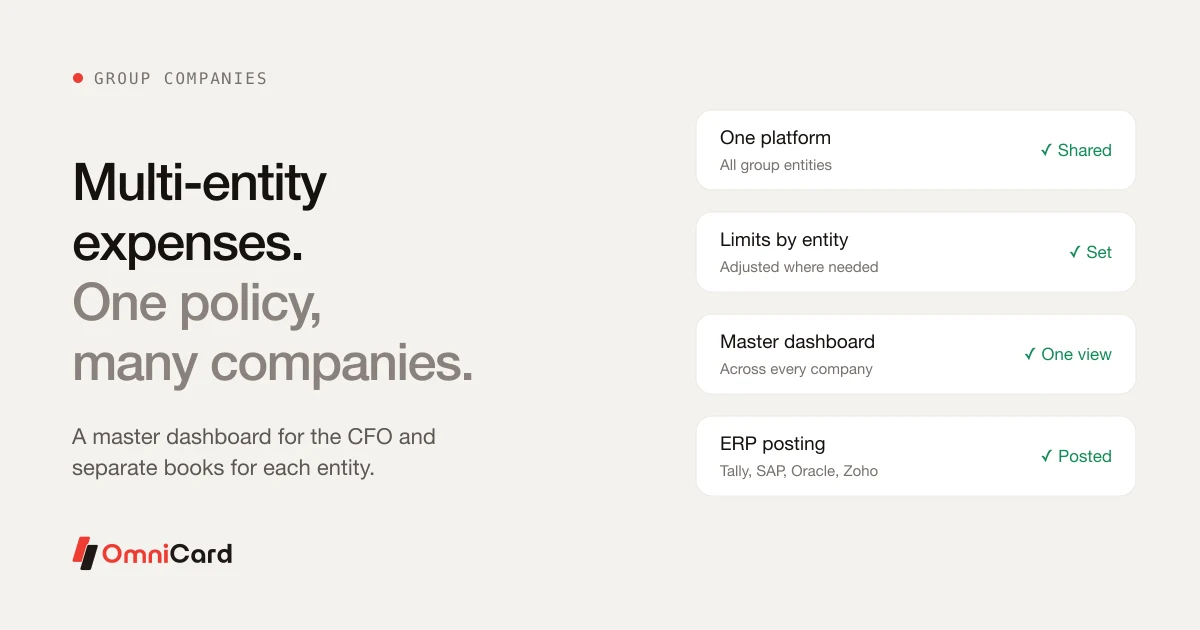
Multi-Entity Expense Management: One Policy Across Group Companies
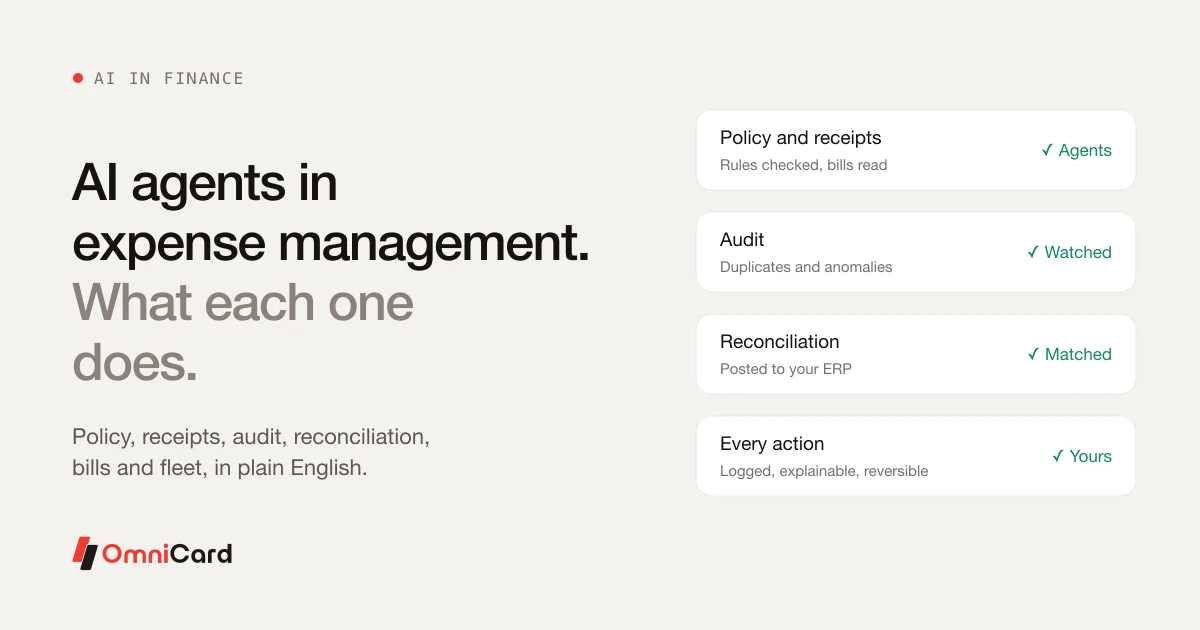
AI Agents in Expense Management: What Each One Actually Does