Payment Platform Security: What ISO 27001, PCI DSS and SOC 2 Tell You
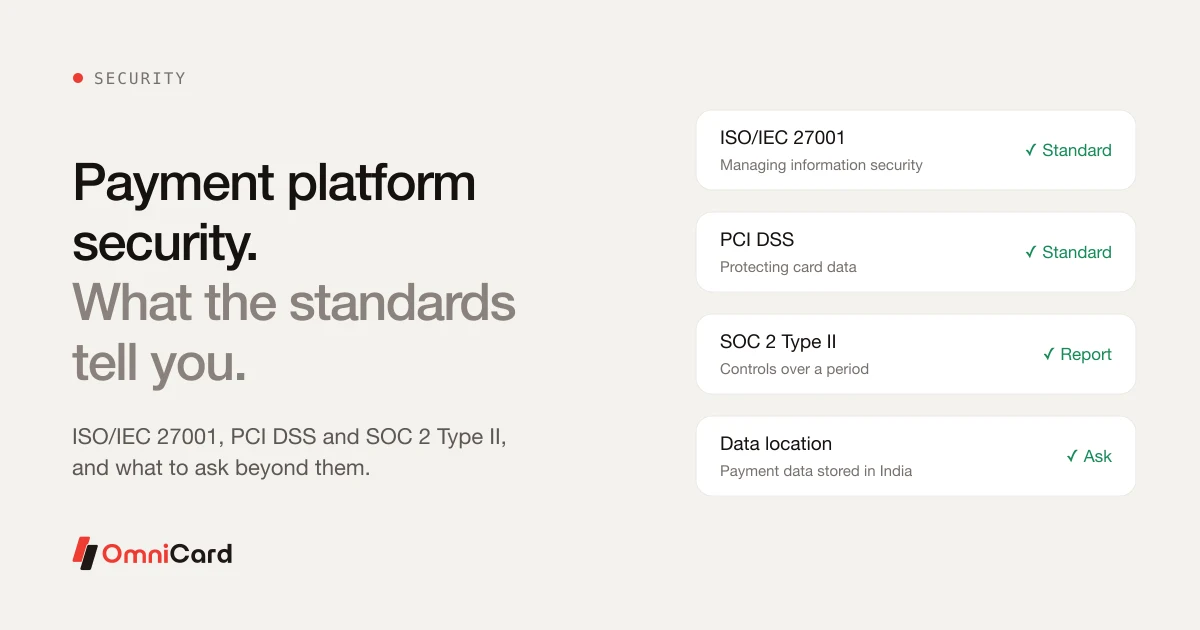
When a platform handles your company's payments, security is not optional. Certificates are a useful signal, but they mean more once you know what each one covers.
ISO/IEC 27001
An international standard for managing information security: how an organisation identifies risks and controls them.
PCI DSS
The payment card industry's standard for protecting card data wherever it is stored, processed or sent.
SOC 2 Type II
An independent report on how a service's controls for security and related areas worked over a period of time.
What else to ask
- Where is payment data stored?
- Who can see it inside the vendor?
- What happens if something goes wrong, and how will you be told?
- Can you see an audit trail of what the platform did?
How OmniCard fits
OmniCard holds ISO/IEC 27001, PCI DSS and SOC 2 Type II certifications, and payment data is stored in India. OmniCard is run by Eroute Technologies Pvt. Ltd., an RBI-authorised Prepaid Payment Instrument (PPI) issuer and a direct NPCI issuer for RuPay cards, UPI (the @omni handle) and FASTag, with no sponsor bank in between.
Related: Audit-ready expense records
Keep reading

Here’s why you shouldn't use your Primary debit card at ATM
Understanding IMPS: Immediate Payment Service
Which expense platforms are best for companies that prioritise security and compliance over cashback rewards?
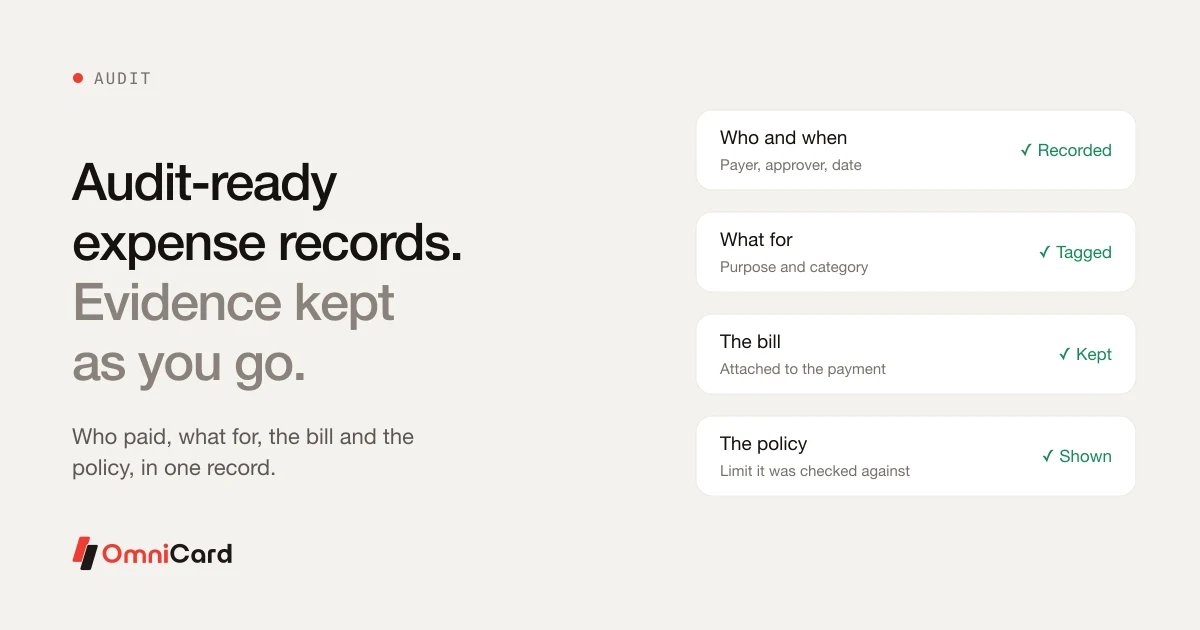
Audit-Ready Expense Records: What Auditors Ask For

How Much Can You Actually Save with an Expense Management Platform