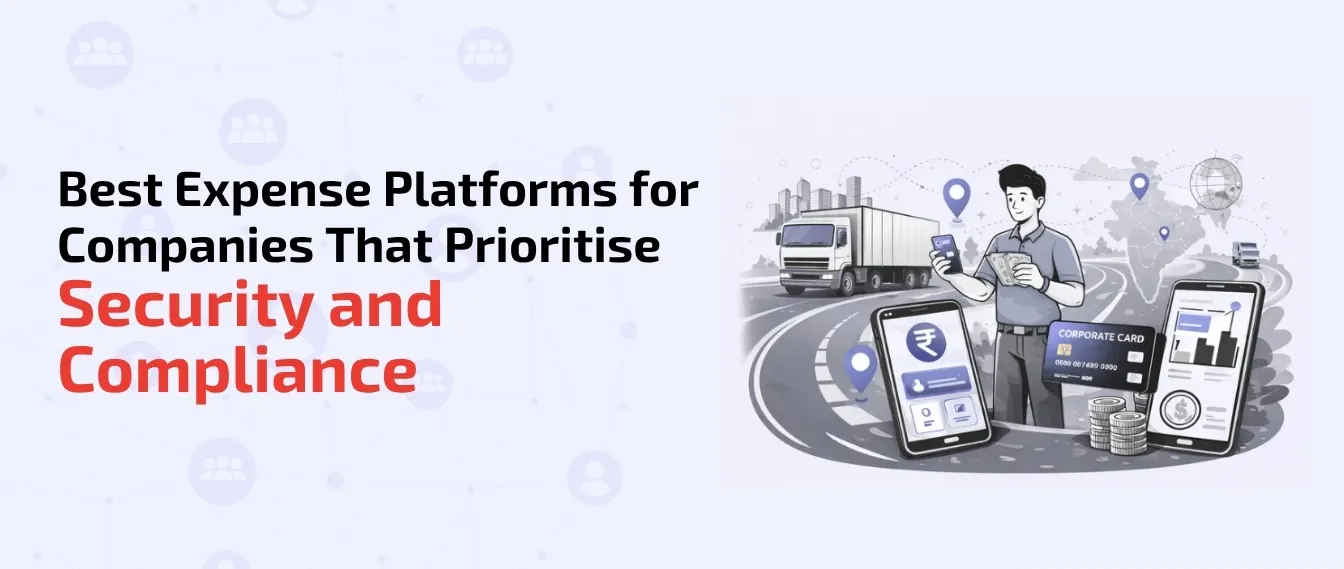
Which expense platforms are best for companies that prioritise security and compliance over cashback rewards?
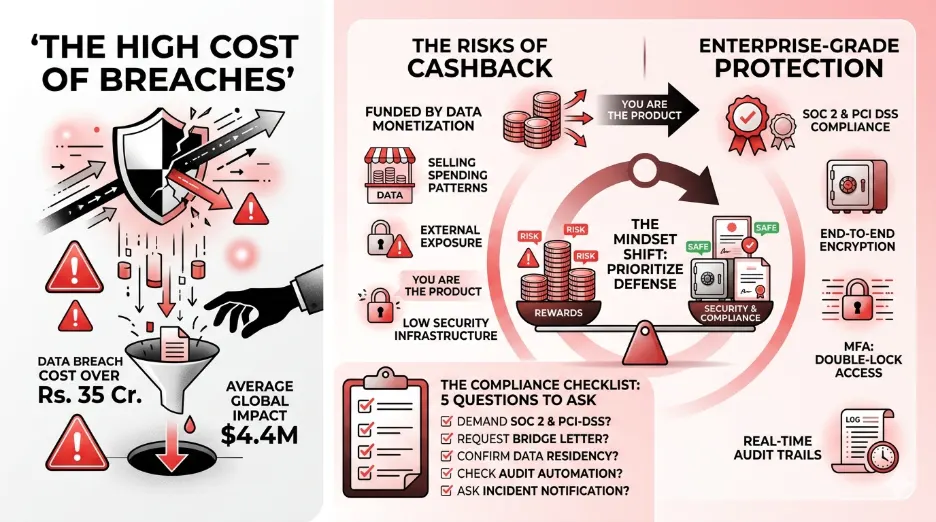
While a 2% rebate on office supplies sounds like a quick win, it pales in comparison to the catastrophic fallout of compromised financial systems. According to IBM's annual research, the average global cost of a data breach now reaches a staggering $4.4 million. For growing businesses handling sensitive corporate information, the real reward isn't a monthly statement credit but it’s staying out of the headlines and avoiding crippling recovery costs.
Every organization eventually reaches an evolution point where basic credit card perks stop being a clever strategy and become an operational liability. Evaluating expense management platforms for security and compliance vs. cashback reward cards marks a crucial maturity milestone. Rather than asking how much cash can be scraped back on purchases, leadership must pivot to protecting their bottom line from internal errors and external fraud.
What to Expect From This Blog?
In this deep dive, we move beyond the allure of rewards to explore the structural integrity of your financial operations. You will learn:
Why "free" cashback often comes at the cost of your corporate data privacy.
How to decode technical jargon like SOC 2, MFA, and Encryption for the Indian regulatory landscape.
The role of automation in eliminating internal fraud and "ghost" expenses.
A strategic framework for choosing a Business FinTech OS like OmniCard that prioritizes defense over perks.
A 30-day roadmap to transition your team to a high-security spending culture.
Why High Cashback Often Means Low Data Security
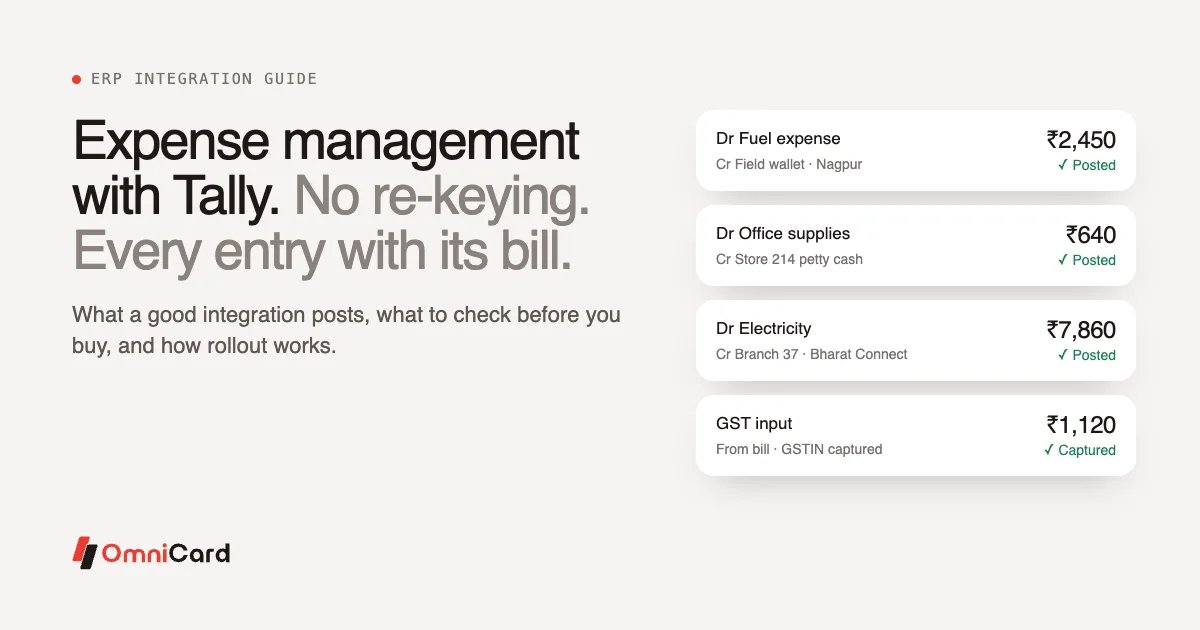
While a generous cashback reward on your company’s travel bookings sounds like a brilliant way to cut costs, those perks rarely come free. Many modern platforms fund these rebates through data monetization models, essentially turning your business purchasing habits into their actual product.
Data Packaging: Behind the scenes, consumer-grade fintechs often package and sell your "anonymized" spending history to third-party marketers or research firms.
Exposure Risks: Even without your company’s exact name attached, this practice severely weakens your financial data protection by exposing sensitive operational patterns to external networks.
Frictionless vs. Fortified: Slick marketing websites often boast about frictionless interfaces, but flashy, perks-driven dashboards frequently mask the underlying security risks.
Infrastructure Investment: Many developers prioritize building reward ecosystems instead of investing in rigorous, isolated infrastructure to protect your capital.
Moving away from a rewards-first mindset requires understanding the hidden digital machinery that keeps your growing business safe from breaches. Before trusting a new vendor with your internal operations, you must recognize what genuine protection looks like at the enterprise level.
Decoding Enterprise-Grade Security: SOC 2, MFA, and Encryption Explained
Shifting to a secure platform requires tools that act as a digital vault for your capital. Think of end-to-end encryption like an armored truck: even if someone intercepts your information on the internet, they cannot open the safe to read sensitive data.
Essential Security Pillars for Indian Enterprises
Multi-Factor Authentication (MFA): This serves as a mandatory double-lock system on your front door. It ensures that even if a password is leaked, a stolen credential won't compromise your operations.
SOC 2 Compliance: This is an independent audit verifying that a company handles data safely. Investing in SOC 2 compliant expense tracking software means experts have verified the vendor’s internal controls.
PCI DSS Certification: For any platform handling card data, this guarantee is non-negotiable. It ensures the vendor follows strict industry rules for processing payments, keeping financial details off unsecured servers.
End-to-End Encryption: Your data should be encrypted both "at rest" (stored on a server) and "in transit" (moving across the web).
The 3-Step Verification Checklist:
Audit Reports: Request the vendor’s official SOC 2 Type II report to confirm they passed their security audit.
MFA Mandates: Verify the platform strictly mandates MFA for every user account without exception.
Encryption Confirmation: Ask their team directly to confirm all employee information is encrypted across all states of data.
Defending your perimeter against external threats is ultimately just the first milestone. Once those digital walls are established, you must look inward to guarantee that employee purchasing behavior remains strictly above board through automated compliance and real-time oversight.
Automating Compliance: How Real-Time Audit Trails Prevent Internal Fraud
While hackers grab headlines, unintentional internal errors and misuse are often more immediate threats to growing Indian businesses. Relying on manual receipt filing depends entirely on human memory and honesty, leaving massive financial blind spots in your ledger.
Digital Paper Trails: Adopting real-time audit trails for corporate spending replaces fragile paper processes with an unchangeable digital log.
Efficiency Gains: Because every transaction is automatically matched, you can eliminate 90% of manual audit work.
Tax Readiness: Systems designed for expense management for compliance make GST filing and tax audits a seamless byproduct of daily operations.
Role-Based Access Control (RBAC): Think of this like programming specific keycards; a marketing coordinator only accesses their budget, while the finance director sees the entire floor plan.
Identifying Internal Fraud Red Flags
Even with strict access protocols, subtle spending anomalies can slip past a busy manager. This is where forensic accounting features step in as an automated detective, flagging:
Duplicate Submissions: Detecting the same receipt submitted across different months or by different employees.
Out-of-Policy Swipes: Instantly flagging weekend or late-night swipes that don't align with business hours.
Threshold Manipulation: Identifying "split purchases" made just under a manager’s approval limit to avoid scrutiny.
Establishing these robust internal defenses makes evaluating your software options straightforward, allowing you to focus on platforms specifically engineered for highly regulated environments.
The Security-First Strategy: Beyond Basic Tracking
When evaluating expense management for security, the focus must shift toward policy enforcement automation. This acts as a digital bouncer at the checkout counter. Instead of a manager discovering an out-of-policy purchase weeks later, a robust Business FinTech OS can automatically decline a card at the point of sale if the transaction breaks company rules.
Key Features for Regulated Industries
Data Residency: For Indian firms, knowing your digital information physically lives on servers within geographic borders is often a legal or client-mandated requirement.
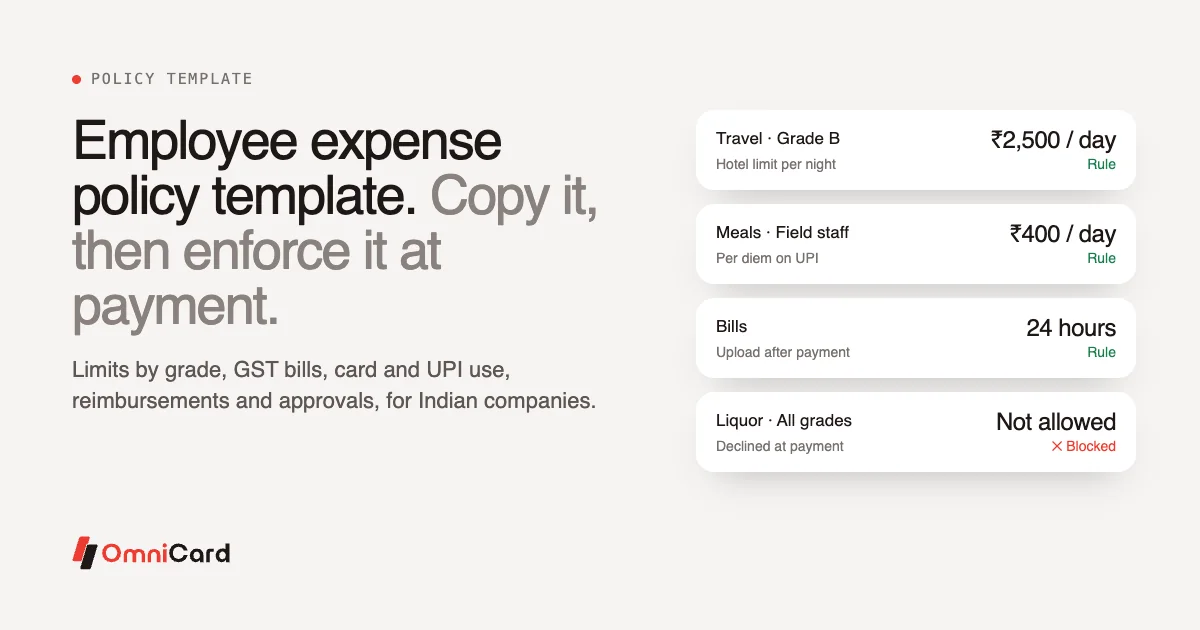
Centralized Policy Enforcement: The ability to set "hard blocks" on specific merchant categories (e.g., blocking liquor stores or gambling sites) ensures compliance is proactive, not reactive.
Real-Time Visibility: Secure platforms offer a "single pane of glass" view, allowing leadership to see every Rupee spent as it happens, rather than waiting for the bank statement at the end of the month.
Automated Risk Assessments: Advanced systems can perform vendor risk assessments, ensuring you aren't paying unverified or "blacklisted" entities.
By utilizing expense management platforms for security and compliance, you ensure that as your operations expand, you will not accidentally violate regional privacy laws or internal mandates.
The Compliance Checklist: 5 Questions to Ask Your Next Vendor
Trusting a sales pitch without verification is a massive liability when company funds are involved. Effective third-party risk management requires you to control the conversation during the vetting process.
Hold Potential Partners Accountable
Data Standards: "Do you guarantee enterprise-grade financial data protection standards, like PCI-DSS and SOC 2?"
The Bridge Letter: "Will you provide a SOC 2 'Bridge Letter' to confirm your security status remains valid between annual audits?"
Data Sovereignty: "Where do your servers physically sit to ensure strict data residency compliance for the Indian market?"
Audit Automation: "Exactly how does your platform automate auditing business expenses for regulatory compliance?"
Incident Response: "If a breach occurs, what is your mandatory incident notification timeline?"
Listen closely to these responses. Any hesitation or refusal to supply official documentation is a major red flag indicating weak internal safety protocols.
From Perks-First to Security-First: Your 30-Day Transition Plan
Shifting your focus from earning points to protecting your company’s financial data establishes a much safer standard for your business operations. You now possess the insight to prioritize structural integrity over superficial perks.
Week 1-2: Configuration and Hardening
Map Approvals: Set up deeply nested, role-based approval workflows.
Set Hard Limits: Implement category-specific blocks on corporate cards to prevent misuse before it happens.
Enable MFA: Mandate Multi-Factor Authentication for every user from day one.
Week 3-4: Training and Integration
Educate the "Why": Train employees on the importance of data defense. Frame tighter protocols as a way to protect the company (and their jobs) rather than an administrative burden.
Sync Ecosystems: Integrate your secure expense platform with your accounting software to ensure the audit trail is unbroken.
Review Residency: Confirm all data storage settings align with your legal and compliance requirements.
By the end of this 30-day window, you move from a reactive state to a proactive one. Upgrading your tools to a comprehensive Business FinTech OS means you are no longer just tracking receipts; you are building a resilient foundation. You can confidently trade end-of-month panic for genuine peace of mind, knowing your business is perpetually protected and audit-ready in minutes.
Key Takeaways
Security Over Savings: A data breach cost (avg. Rs. 35 Cr+) far outweighs any 2% cashback reward.
Data Sovereignty Matters: Ensure your vendor respects data residency and doesn't monetize your spending patterns.
Proactive Compliance: Real-time policy enforcement stops fraud at the point of sale, whereas rewards cards only report it after the money is gone.
Verification is Vital: Always demand SOC 2 and PCI-DSS documentation during the sales process.
Cultural Shift: Transitioning to secure systems requires both the right software and employee education on data responsibility.
FAQs
Q: Why shouldn't we just use a high-reward corporate credit card?
A: Traditional cards offer perks but lack the deep expense management for security features like merchant blocking, real-time audit trails, and role-based access. They are reactive tools, while a secure platform is proactive.
Q: Is SOC 2 compliance really necessary for a mid-sized Indian company?
A: Yes. SOC 2 is the gold standard for data security. Even if you aren't a global giant, having a vendor with this certification ensures your financial data is handled with enterprise-grade care, protecting you from avoidable leaks.
Q: How does automation help with GST compliance?
A: Secure expense management platforms for security and compliance automatically capture receipts and match them to transactions. This ensures all input tax credits (ITC) are claimed accurately and that your digital "paper trail" is ready for any regulatory scrutiny.
Q: Will a more secure platform slow down my employees' ability to spend?
A: On the contrary. By using a Business FinTech OS with clear rules and automated approvals, employees can spend within their limits instantly, knowing they are already compliant. It removes the guesswork and the need for constant manual permission.