Why Should You Be Using UPI for Your Business Spends in 2023?
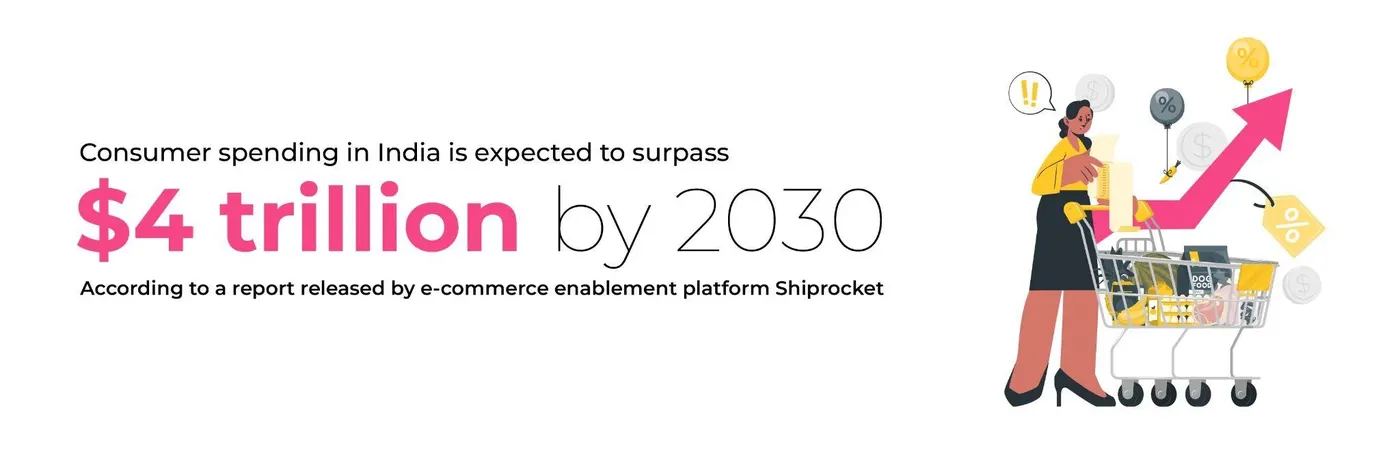
Consumer spending in India is expected to surpass $4 trillion by 2030, according to a report released by e-commerce enablement platform Shiprocket.
The trends report titled “eCommerce in the New Bharat and its Future” also mentioned that the UPI was the most preferred prepay option (57%) in terms of consumer preferences, followed by credit cards (31%) and other payment options such as wallets, net banking, and debit cards. (12%).
In Peer to Peer context, the above statistics make absolute sense.
Just take a look at your transaction history in your preferred UPI app.
With how this one-click payment system has penetrated our day-to-day lives, the obvious next step lies in its adoption in the SME/MSME landscape.
So, what is the landscape in that context?
B2B Spend Landscape
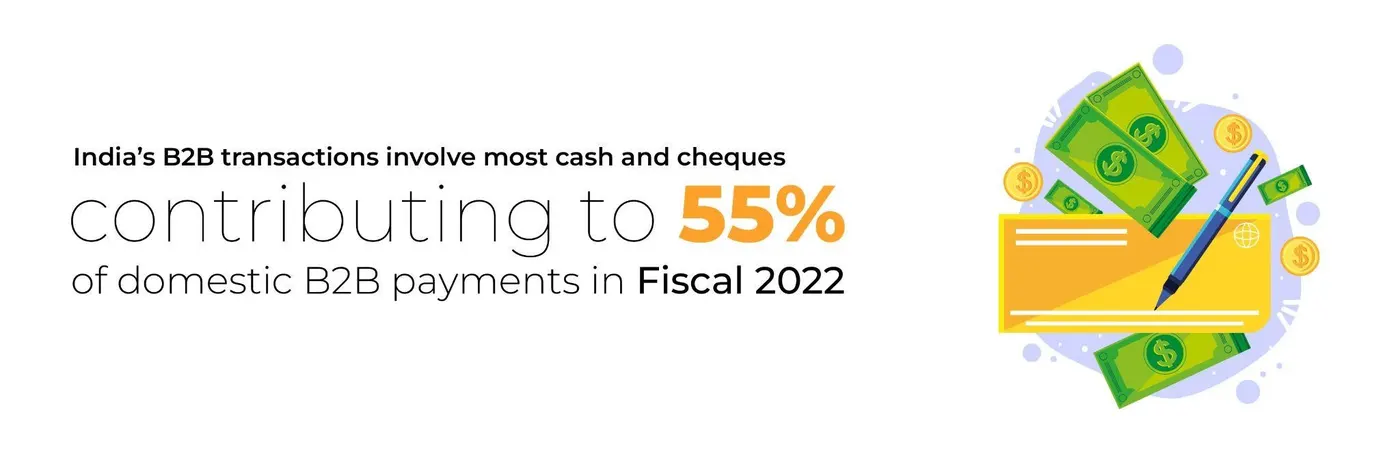
India’s B2B payments market is poised to grow from USD 7.6-8.0 trillion in Fiscal 2022 to USD 10-11 trillion in Fiscal 2026. In line with the global trends, India’s B2B transactions involve most cash and cheques, contributing to 55% of domestic B2B payments in Fiscal 2022.
As recent as 2022, cash and cheques have become the preferred methods of transaction for businesses, owing to the general awareness of adopting digital methods for large ticket sizes and high volume of transactions. 95 per cent of Indian MSMEs are currently underserved by the financial services industry. If we have to embark upon a true financial inclusion journey, will require bringing India’s 60 million micro, small, and medium enterprises (MSMEs) into India’s digital payments infrastructure, especially the micro-enterprises
The Need for Digital Intervention B2B Spend Landscape
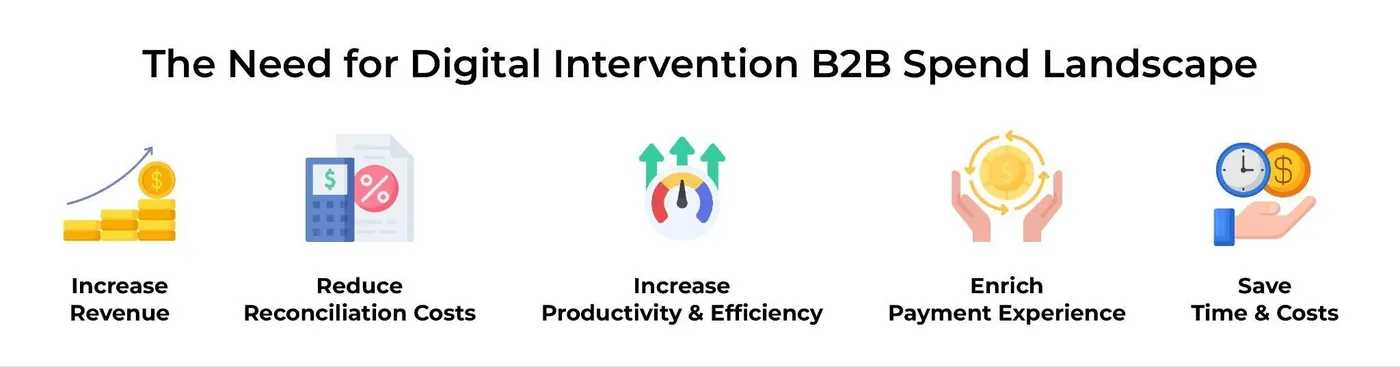
By fiscal 2026, the market share for B2B payments is expected to reach $10-11 trillion and take centre stage.
However, in its current form, the traditional system of B2B payments has the disadvantages of a lot of paperwork due to non-standardised invoices and tedious data entry, which are manual and prone to errors. In addition, gathering approvals from several departments for invoice payments post-accounting is cumbersome and time-consuming.
In such a scenario, the intervention of a digital-first method will help disrupt and solve each pain point in the B2B transaction value chain. This will help increase revenue, reduce reconciliation costs, increase productivity and efficiency, provide an enriched payment experience for customers, and save time and costs to a great extent. Additionally, using a centralised platform enables users to track cashflows more effectively.
UPI intervention: UPI 2.0
We have now established that one of the key asks in achieving massive adoption of digital payments is enhancing trust in digital transactions pan-India, both at the end of the payer and small merchants. UPI 2.0 aims to address concerns by providing more context to the underlying transactions.
Most UPI transactions have been payer-initiated and focused on person-to-person (P2P) transfers. The ability of merchants to send a digital invoice along with a collect request in UPI 2.0 can help the payer with the purpose of the request and boost collect request side transactions.
Another noteworthy feature is related to the quick response (QR) code—the payment instrument which promotes digital payments at micro-merchants. Offline P2M payments are made easily and quickly by embedding a QR code with graphical encryption of payment details with autofill details in Dynamic Code.
The Benefits of Deploying UPI for Business Payments
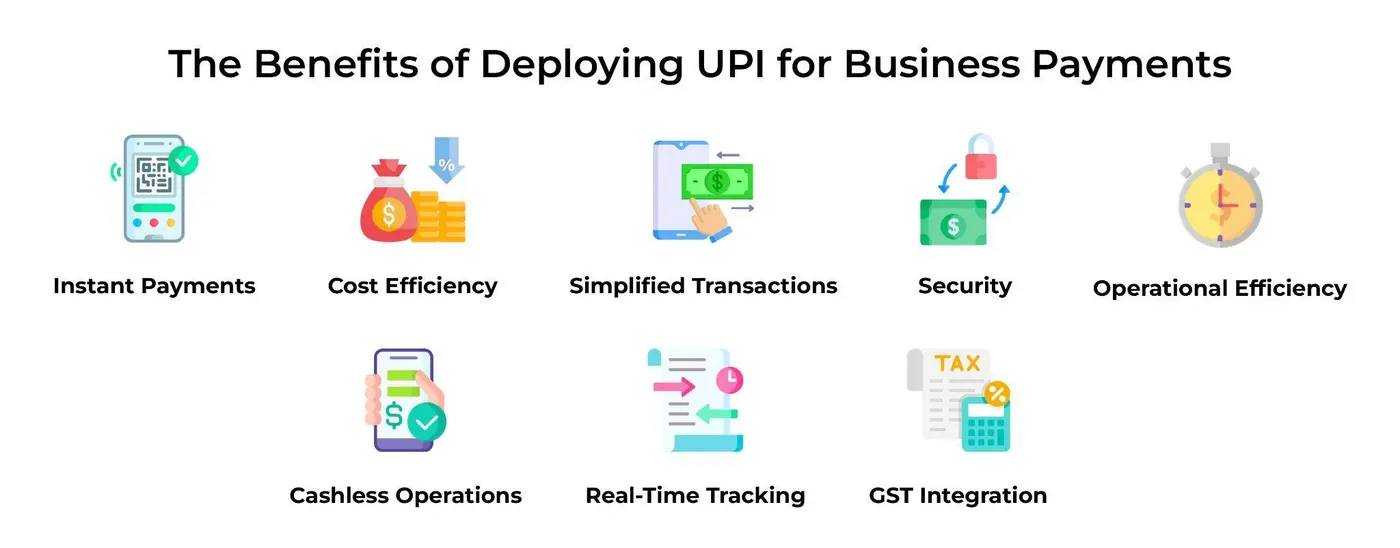
The factor that remains consistent across the board, consumer or business side of things is the benefits factors that just make UPI click, [Quite literally]
Instant Payments: UPI enables SMEs to make and receive instant payments, ensuring quicker settlements and improved cash flow management. This is especially vital for businesses with limited working capital.
Cost-Efficiency: UPI transactions typically have lower fees than traditional payment methods like NEFT or RTGS. This cost-efficiency benefits SMEs with tight budgets.
Simplified Transactions: UPI offers a user-friendly and straightforward way to conduct financial transactions. SME owners and employees can quickly adapt to the system without extensive training.
Security: UPI transactions are secured by multi-factor authentication, ensuring that payments are made securely. This reduces the risk of fraud and unauthorised transactions.
Cashless Operations: In an increasingly cashless economy, UPI promotes cashless transactions. SMEs that embrace UPI can cater to a broader customer base that prefers digital payments.
Real-Time Tracking: UPI provides real-time transaction updates, allowing SMEs to instantly monitor their payments and receipts. This enhances transparency and simplifies accounting.
GST Integration: UPI systems often integrate with GST (Goods and Services Tax) reporting, simplifying tax calculations and compliance for SMEs.
Operational Efficiency: By embracing digital payments through UPI, SMEs can streamline their payment workflows, reducing administrative overhead and saving time.
The Way Forward
As UPI continues to evolve and gain wider acceptance, it is expected to simplify business spending for SMEs further and drive their growth in the competitive market. Thriving in this fertile ecosystem requires fair collaboration between players operating within. This is where Omnicard’s partnership with Decentro comes into play.
This partnership serves the bigger purpose of not only enabling fintech players within the Indian ecosystem but also doing our respective bit to democratise fintech for all. On one hand, to boost the benefits of UPI even more, OmniCard set out to offer UPI to Businesses without the need to link to a Bank account. The security and onboarding part associated with the use case was easily addressed via Decentro’s Banking APIs, efficiently rounding the association.
The next wave of the payment ecosystem has to focus on micro-enterprises, and UPI is the connector that will enable this revolution to move forward. The version which will finally make the cut, well, that still needs to be determined.