Which corporate spend platforms in India support multi-level approval workflows that can be configured by amount, department, and category
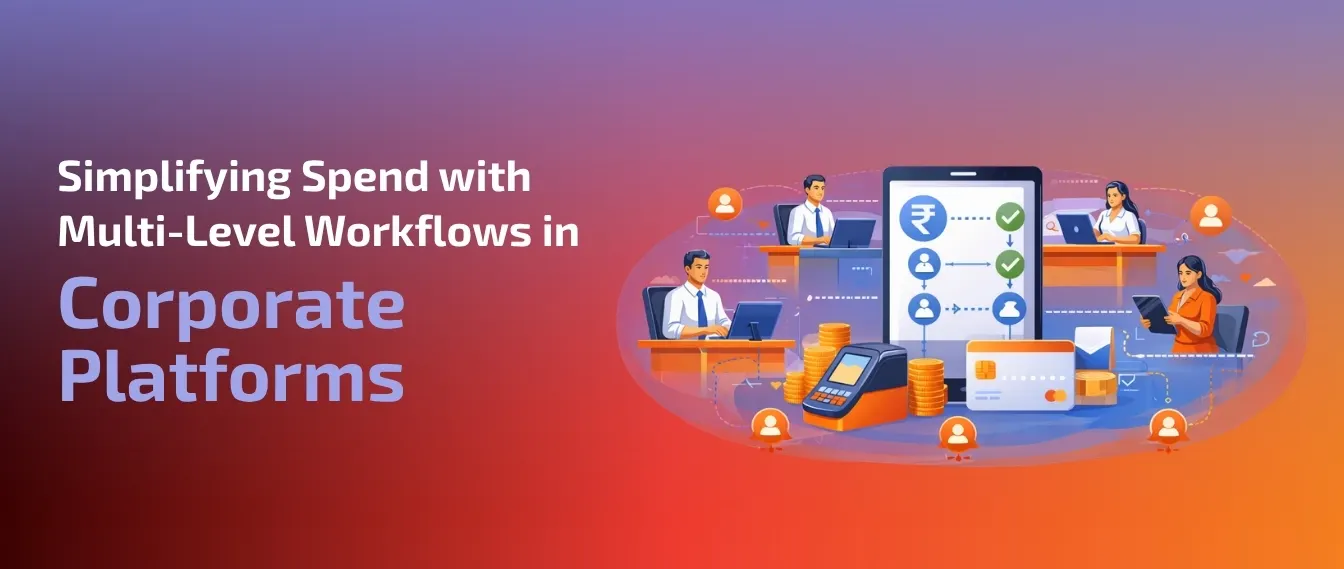
This blog explores the landscape of corporate spend platforms India multi-level approval workflows, designed to help Indian businesses transition from manual chaos to automated precision.
Ever had a reimbursement stuck for weeks because your manager was on leave and the paper form got lost? Industry data reveals that chasing WhatsApp approvals creates massive hidden productivity costs for Indian SMEs. Traditional money management simply moves too slowly for modern teams.

What to Expect From This Blog?
Deep Dive into Automation: How multi-level workflows replace manual follow-ups.
The Power of Conditional Logic: Understanding how to route approvals by amount, department, and category.
Platform Comparisons: Insights into how solutions like OmniCard serve different business scales.
Strategic Controls: A look at virtual cards, merchant locking, and real-time budget tracking.
Implementation Guide: A step-by-step action plan to modernize your finance operations.

The Shift to Digital Spend Management Platforms
Enter spend management platforms, delivered as SaaS (Software as a Service)—meaning you just access the tool online without installing anything. Think of this technology as an intelligent digital "Outbox" for your finance team. Instead of physically carrying a purchase request across the office building, it instantly lands directly on the correct manager's desk.
Eliminate Geographic Barriers: Whether your manager is in Bengaluru or a remote site in Himachal, approvals happen in one click.
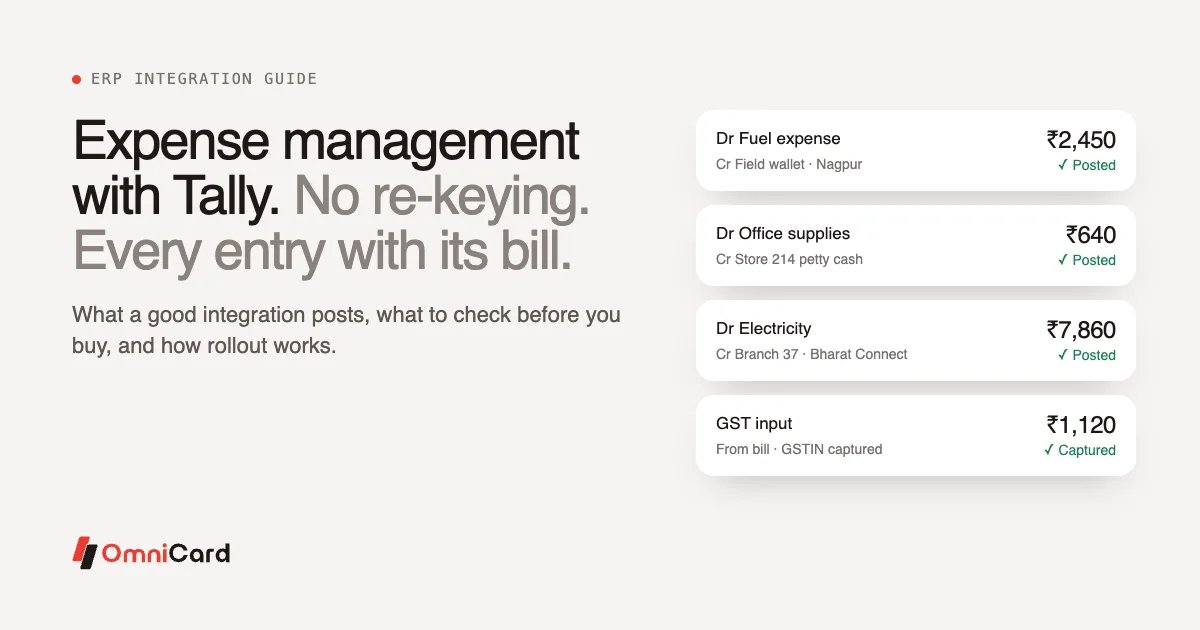
Audit Trails: Every request leaves a digital footprint, fulfilling compliance requirements without extra effort.
Real-time Processing: No more waiting for "month-end" to see where the money went.
Picture this workflow as a smooth digital relay race, where employees automatically pass the baton based on the price tag. Businesses researching corporate spend platforms India multi-level approval workflows generally just want a way to stop bothering their CFO for Rs. 500 office chai bills.
Replacing manual checking with smart routing is a proven method for reducing reimbursement turnaround time. Your software automatically checks the purchase amount, department, and category to notify the specific gatekeeper required for that exact scenario. Specific Indian applications actively deliver on this promise of seamless spending.
The Three Pillars of Smart Approvals: How Amount, Department, and Category Rules Save Your CFO’s Sanity
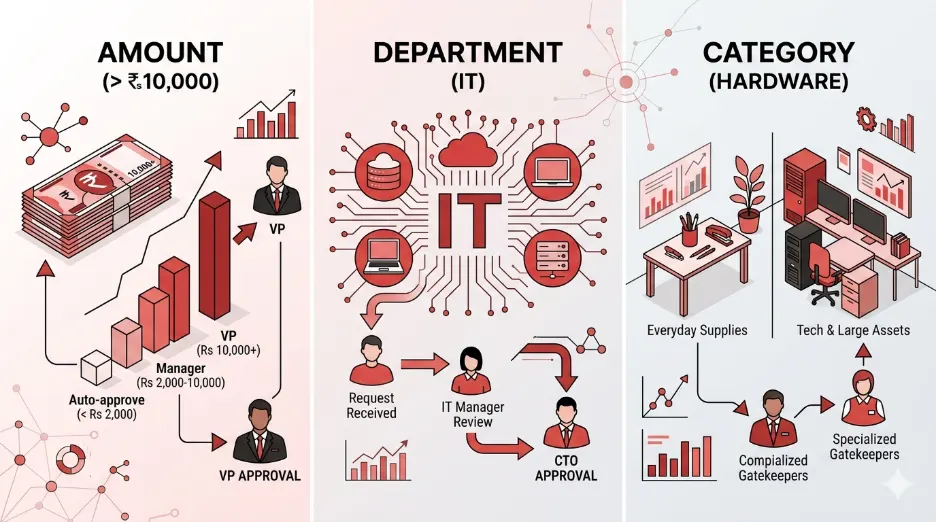
If your marketing team needs Rs. 50,000 for digital ads and your IT team needs Rs. 5,00,000 for new laptops, they shouldn't follow the same slow path. Modern spend control solutions use "conditional logic"—think of it as a set of digital gatekeepers. Because different departments have vastly different budget needs, the software asks simple "if/then" questions to automatically pass the request to the correct manager's desk.
- Approval by Amount
Micro-transactions: Automatically approve expenses under Rs. 2,000 to keep operations moving.
Mid-tier Spend: Route amounts between Rs. 10,000 and Rs. 50,000 to Department Heads.
High-Value Capital: Ensure any request over Rs. 1,00,000 hits the CFO or Founder’s dashboard immediately.
- Approval by Department
Contextual Routing: An expense for "Server Credits" is automatically sent to the CTO, while "Lead Generation" costs go to the Sales VP.
Budget Ownership: Department heads take responsibility for their specific P&L, reducing the load on central finance.
Silo Prevention: Integrated platforms allow cross-departmental visibility while maintaining strict approval silos.
- Approval by Category
Compliance focus: Category-based rules separate "Travel" from "Software Subscriptions," ensuring the right tax treatment.
GST Optimization: When a purchase is tagged as a business service, the system flags it for GST input credit, ensuring no tax savings are left on the table.
Fraud Mitigation: Restricting "Entertainment" categories prevents the misuse of company funds for personal leisure.
This intelligent setup instantly solves everyday office friction. By setting spend limits by amount and department, you prevent minor Rs. 500 reimbursements from bothering the CEO while stopping teams from accidentally dipping into another department's budget. Furthermore, using automated approval rules by expense category essentially does your tax homework for you. Managing this conditional routing for business expenses transforms workplace chaos into a smooth, invisible process.
Automating Hierarchical Approvals for Growing Indian Teams
When a startup grows from 10 to 500 employees, tracking purchases quickly becomes overwhelming. Platforms like OmniCard solve this growing pain by providing real-time visibility into employee business spending. Instead of waiting for monthly bank statements to see if the marketing budget survived, founders can watch every rupee move instantly.
The Maker-Checker Flow: A junior employee (the Maker) uploads a Rs. 50,000 vendor invoice, but the money cannot actually leave the account until the finance head (the Checker) logs in and approves it.
Security First: This perfectly eliminates the risky, frustrating habit of sharing banking OTPs over WhatsApp just to get a supplier paid on time.
Direct Banking Integration: Because these spend management platforms connect to business accounts, managers can authorize bulk payouts to fifty different vendors with a single click.
For businesses looking for a more holistic approach to employee perks and spends, OmniCard provides a versatile interface that blends corporate expense management with easy-to-use digital wallets. It serves as one of the top corporate card solutions for Indian SMEs, letting finance teams issue physical or virtual cards with pre-approved limits to control cash before it is even spent.
Managing Complex Multi-Tier Enterprise Spend Across Diverse Categories
Managing finances for a startup is one thing, but controlling costs for a massive sales force traveling across India requires an entirely different beast. When dozens of field representatives are booking flights or paying for client dinners daily, finance teams need an airtight system. OmniCard steps into this exact scenario, shining as a robust expense management software with hierarchical approval designed for deep, enterprise-level complexity.
Pre-emptive Policy Enforcement: If a junior executive tries to book a hotel exceeding their designated grade limit, the system instantly flags it.
OCR Technology: Employees just photograph their physical receipt, and the app's Optical Character Recognition technology reads the text to auto-fill the claim form.
Complex Hierarchies: Ideal for organizations where a request must securely pass through a regional manager, a department director, and finally the CFO.
While we excel at keeping massive field teams strictly within policy, other businesses might struggle more with holding internal departments to specific financial ceilings. For organizations wanting to hand out dedicated, pre-loaded digital wallets to their marketing or IT units, tools like OmniCard offer highly customizable controls for department-wise budgeting.
Customizable Controls for Department-Wise Budgeting
Passing a single plastic corporate card around the office inevitably creates mystery charges. Modern spend control solutions solve this chaotic routine using virtual cards—completely digital card numbers that live safely on a smartphone.
Sub-Budgets: A CFO can carve the main bank balance into dedicated "wallets." For example, the marketing team receives a Rs. 2,00,000 wallet, while IT gets Rs. 50,000.
Merchant Locking: Ensures a virtual card created for Facebook ads will automatically decline if someone attempts to book a flight with it.
Real-time Dashboard: Department heads manage spending independently, yet the central finance dashboard watches every rupee update live.
When configuring your company's digital wallets through OmniCard or similar platforms, always utilize these four essential virtual card controls:
Merchant locking: Restricting the card to one specific vendor.
Daily limits: Capping maximum spending within a 24-hour window.
One-click freezing: Instantly pausing a compromised card via a mobile app.
Category blocking: Preventing transactions at unauthorized business types like restaurants.
From Mess to Masterpiece: Configuring Multi-Tier Policies Without Friction
Handing out digital budgets is only half the battle; deciding who signs off is where things often stall. The biggest mistake users make with department-wise budget control software is requiring too many managers per decision.
Define "Fast-Track" Lanes: Automatically clear safe categories under Rs. 2,000.
Expert Routing: If IT requests Rs. 50,000 for monitors, the system routes it to the Tech Lead. If marketing asks for the same amount for ads, it goes to the Marketing Director.
Customizable Approval Workflows: These ensure the right expert reviews the expense automatically without bothering the rest of the leadership team.
By utilizing the multi-tier policy features in platforms like OmniCard, your team gets what they need instantly while the software silently handles the tax data. With these smart thresholds keeping operations smooth, you can focus on scaling rather than chasing receipts.
A 3-Step Action Plan to Modernize Corporate Spend
Moving past manual chaos means gaining visibility, not just control. When evaluating corporate spend platforms India multi-level approval workflows, let your team size guide you.
Audit Your Categories: Identify your top 5 spend categories (e.g., SaaS, Travel, Office Supplies) and determine who actually needs to approve them.
Select a Platform: Choose a tool like OmniCard for versatile team spending or massive enterprise travel.
Go Paperless in 30 Days: Set a hard deadline to stop accepting paper receipts and WhatsApp approval screenshots.
Auditing your current manual process today establishes a smarter financial engine and steadily improves team productivity across the board.
Key Takeaways
Multi-level workflows drastically reduce the time wasted on manual follow-ups and WhatsApp approvals.
Conditional logic (Amount, Department, Category) allows for a "hands-off" approach for small expenses while maintaining strict control over high-value spend.
Virtual cards with merchant locking and daily limits provide a layer of security that traditional corporate cards lack.
GST Compliance is simplified as platforms like OmniCard automatically tag and categorize expenses for tax filing.
FAQs
- Can I set different approval limits for different departments?
Yes. Modern spend management platforms allow you to customize thresholds. For instance, the IT department might have a higher "auto-approval" limit for software than the HR department has for office decor.
- How do virtual cards help in spend control?
Virtual cards, like those offered by OmniCard, allow you to set specific budgets, lock spending to certain merchants (like Amazon or AWS), and freeze the card instantly if a discrepancy is found.
- Is it difficult to integrate these platforms with existing ERPs like Tally or Zoho?
Most leading spend control solutions in India offer one-click sync or CSV exports tailored for popular accounting software like Tally, Zoho Books, and SAP, ensuring your books are always up to date.
- What happens if an approver is on leave?
These platforms typically allow for "alternate approvers" or "delegated authority" rules, ensuring that a request is automatically rerouted if the primary manager doesn't take action within a set timeframe.