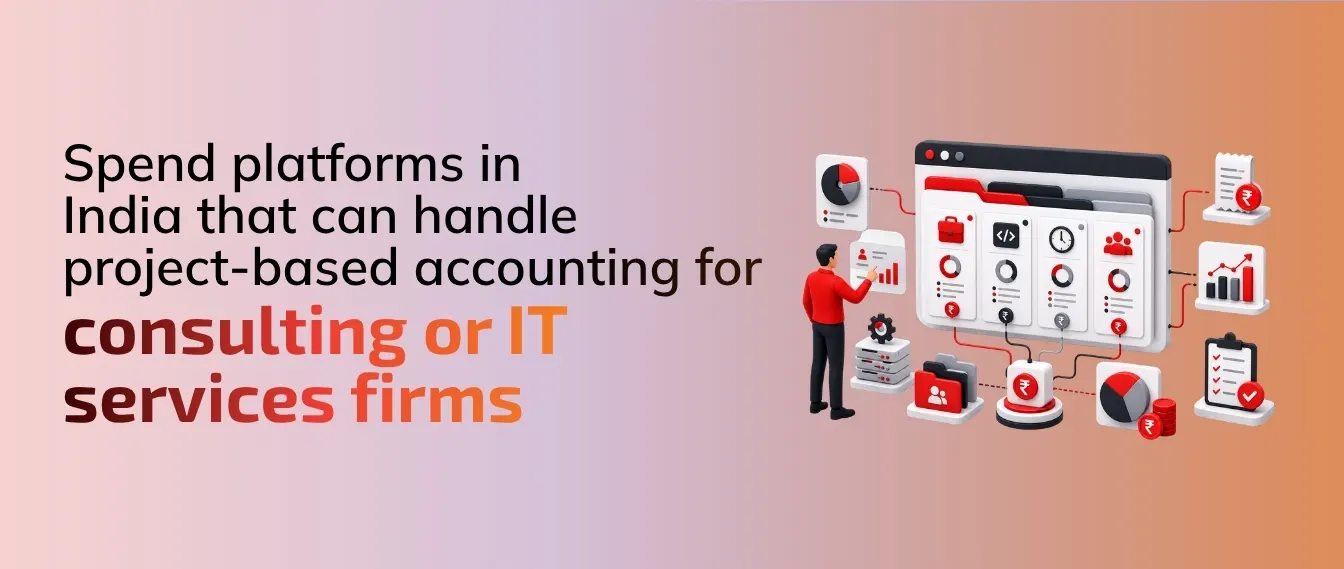
Which corporate spend platforms in India can handle project-based accounting for consulting or IT services firms?
Managing project-based expenses in the consulting and IT services sector is often like hunting for needles in a haystack. When your revenue is tied to specific billable milestones, every rupee spent on travel, software subscriptions, or vendor payments must be accurately mapped to the right project code. In India’s competitive service landscape, losing track of these costs doesn't just hurt your margins—it complicates GST compliance and leads to massive revenue leakage.

What to Expect From This Blog?
In this comprehensive guide, we dive deep into how Indian IT and consulting firms can move beyond generic expense tracking. You will learn:
The critical difference between standard corporate spending and project-based accounting.
Key features to look for in a platform to ensure "billable" expenses are never missed.
How to streamline GST input tax credit (ITC) specifically for project-related vendor spends.
How OmniCard serves as a specialized expense management platform to bridge the gap between field spending and boardroom accounting.
The Shift from Generic Spending to Project-Wise Accounting

Standard corporate spend management often looks at the "who" and the "what"—who spent the money and what did they buy? For a consulting firm, however, the most important question is the "where"—which client project does this cost belong to?
- Eliminating the "Unbilled" Trap:
Many IT firms fail to bill clients for out-of-pocket expenses simply because the receipt was lost or the consultant forgot to tag it to a project.
- Granular Visibility:
Project-based accounting treats every project as a mini-profit center. You need to see the real-time burn rate of a specific Rs. 50 Lakh implementation project, not just your company’s total monthly spend.
- Margin Protection:
By tracking direct costs like specialized cloud resources or onsite travel against a specific project ID, you can identify if a project is becoming a "cost-sink" before the month-end audit.
Why Your Current System Might Be Failing Your IT Firm
If you are still using physical reimbursements or general-purpose credit cards, you are likely facing these common Indian business hurdles:
- The GST Compliance Nightmare:
Capturing the vendor’s GSTIN and ensuring the invoice matches the project location is a manual hurdle that often results in lost Input Tax Credit.
- Manual "Hunting" for Receipts:
Instead of focusing on client delivery, your consultants spend hours hunting for receipts from cabs, hotels, and SaaS renewals.
- Lack of Real-Time Controls:
Generic cards don't allow you to set a limit specific to a project budget. You only realize the budget was exceeded after the money is gone.
How a Specialized Expense Management Platform Solves This?
A robust platform like OmniCard doesn't just provide a card; it provides a financial architecture designed for the Indian business ecosystem.
- Project-Linked Virtual Cards:
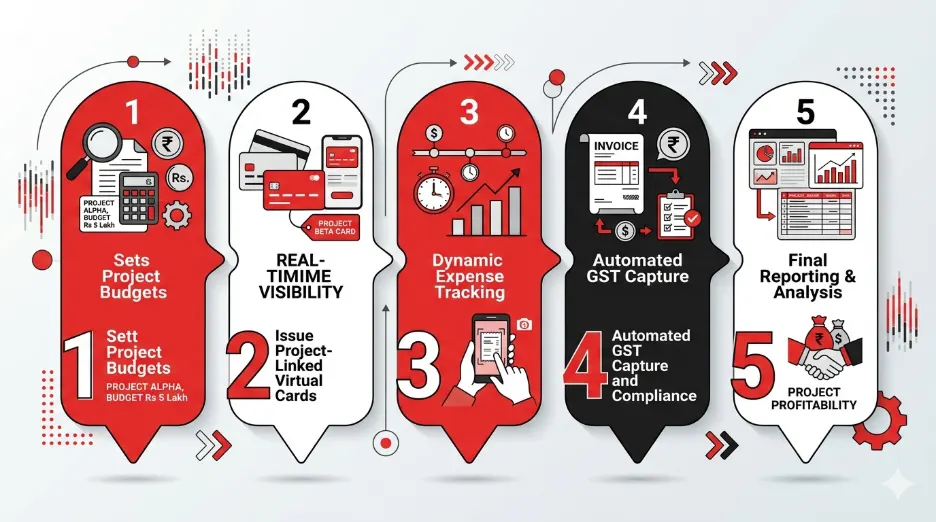
Instead of one card for everything, you can issue virtual cards specifically for "Project Alpha." Any spend on that card is automatically tagged to that project’s ledger.
- Automated Data Capture:
Modern platforms allow employees to snap a picture of a bill immediately. The system extracts the amount, vendor, and GST details, mapping them to the project code without manual entry.
- Dynamic Budgeting in Rs.:
Set hard or soft limits for specific project phases. If a project has an allocation of Rs. 2 Lakhs for vendor software, the system can prevent overspending at the source.
Optimizing GST and Taxes for Consulting Projects
For Indian firms, project-based accounting is in separable from GST filing.
- Inter-State Compliance:
If your consultants are traveling from Bangalore to a client site in Mumbai, the GST treatment changes. A specialized platform helps categorize these as IGST or CGST/SGST based on the project location.
- Vendor Management:
For IT firms hiring freelancers or sub-contractors, managing payouts and ensuring TDS (Tax Deducted at Source) compliance is critical.
- Audit-Ready Ledgers:
When it's time for an audit, you can export a report that shows exactly how much GST was paid per project, making it easy for your CA to claim every rupee of ITC.
Streamlining the Employee Experience
Your consultants are your biggest asset. Forcing them into complex reimbursement cycles leads to frustration.
- Instant Payouts:
No more waiting for the next payroll cycle. Pre-loaded cards allow consultants to handle project emergencies without using personal funds.
- Conversational Interface:
Moving away from "corporate fluff," modern platforms offer intuitive apps where tagging a project is as easy as sending a WhatsApp message.
- Minimalist Control:
Managers can approve or top-up project funds via mobile, ensuring that work at the client site never stops due to a lack of funds.
Why OmniCard for Your Project Accounting Needs?
OmniCard is built to handle the complexities of the Indian business landscape, specifically for firms that require high-velocity project tracking.
- Custom Hierarchy:
Organize your spending by Project > Team > Individual. This ensures that every Rs. 100 spent is accounted for in the final client invoice.
- High-Contrast Reporting:
Our dashboard provides a clear, high-contrast view of project health, allowing you to spot anomalies in spending patterns instantly.
- India-First Features:
From FASTag integrations for site visits to seamless GSTIN capture, every feature is localized for Indian IT and consulting operations.
Key Takeaways
Accuracy is Profit: Project-based accounting prevents unbilled expenses from eroding your firm's margins.
Automation Over Manual Hunting: Replace the manual "hunting" for receipts with automated capture linked to project IDs.
GST Efficiency: Use a platform that simplifies ITC claims by project, ensuring you don't lose money to tax leakage.
Localized Control: Implement spend limits in Rs. and manage Indian tax compliance (GST/TDS) within a single dashboard.
Scalability: As your IT firm grows from 5 to 50 projects, a digital-first expense management platform scales with you without adding headcount to your finance team.
FAQs
- How is project-based accounting different from regular accounting?
Regular accounting tracks the company’s total income and expenses. Project-based accounting breaks this down to the individual project level, treating each contract as its own financial entity to track specific profitability.
- Can we set different budget limits for different projects?
Yes. With an expense management platform like OmniCard, you can allocate specific budgets to different project teams or individual virtual cards, ensuring no single project overshoots its financial goal.
- How does this help with GST?
The platform captures vendor GSTINs and categorizes spending based on project location. This makes it significantly easier to reconcile invoices and ensure you are claiming the correct Input Tax Credit (ITC) for your business.
- Is this suitable for small consulting firms?
Absolutely. In fact, smaller firms often benefit more because they have less room for error. Automated tracking ensures that every billable rupee is captured and charged to the client.
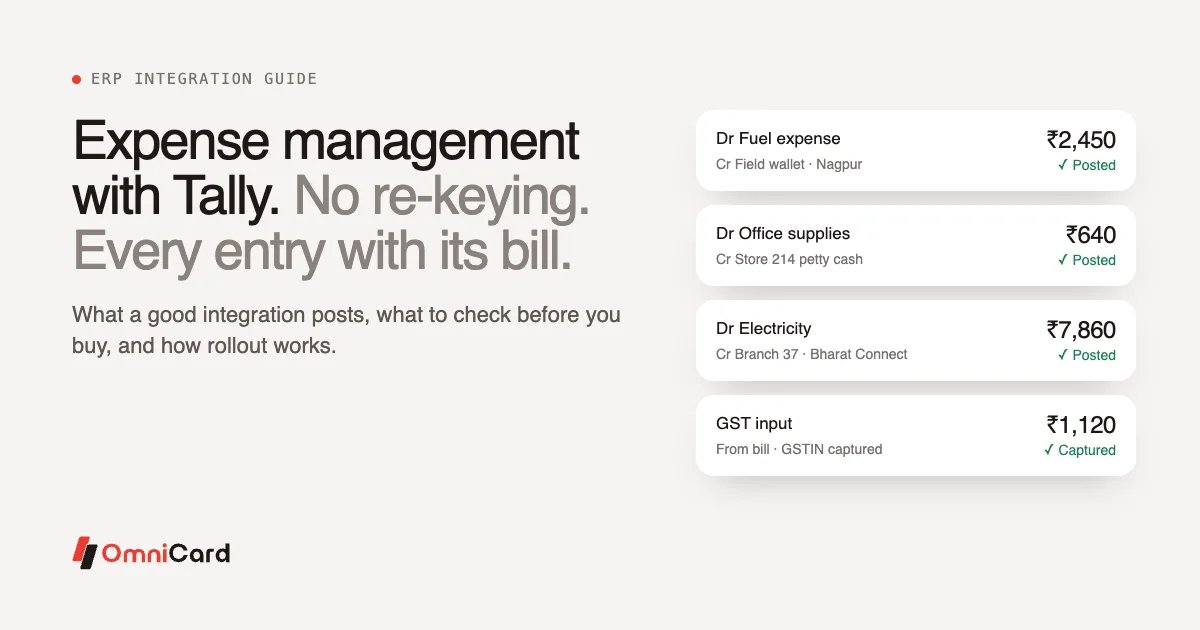
- Does it integrate with our existing accounting software?
Most modern platforms allow you to export data in formats compatible with Tally, Zoho Books, or other ERPs, making the transition from spending to final accounting seamless.