Expense Management for Travel and Tourism Companies

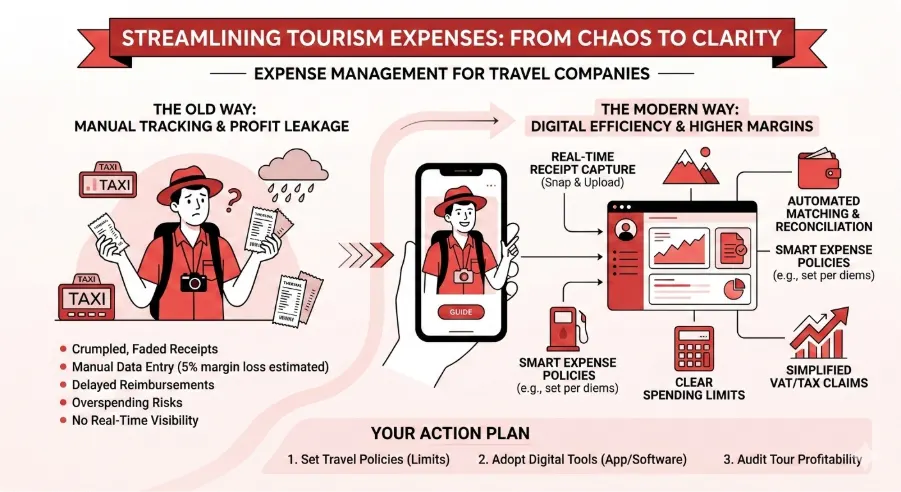
Think back to the last time a team member handed you a faded, crumpled thermal receipt from a taxi ride three weeks ago. That unreadable scrap represents more than just an administrative headache; it is a prime example of "profit leakage," where money quietly disappears through small oversights. In the travel industry, we sell experiences, but behind every sunset tour is a hidden trail of costs—fuel, food, and lodging—that can quickly erode your earnings. Industry estimates suggest that reliance on manual tracking allows simple errors to consume up to 5% of a company's margins.

What to Expect From This Blog?
In this guide, we break down the complexities of tourism finances into actionable steps. You will learn:
How to distinguish between Direct, Indirect, and Reimbursable costs to protect your margins.
Strategies for preventing fraud and overspending through automated travel policies.
The role of real-time digital tools in eliminating manual paperwork and "shoebox" accounting.
How to master multi-currency transactions and tax recovery to stabilize your global cash flow.

Mastering expense management works much like running a disciplined household budget. You have direct costs, such as the gas for a specific trip, and indirect costs, like the office electricity bill. Modern solutions, like OmniCard’s AI-powered spend ecosystem, now use expense tracking apps and real-time receipt capture for remote tour guides to automate this process. By treating these business outflows with the same clarity as personal finances, you ensure that the money coming in actually stays in the bank.
Making Sense of the Spending: Direct Tour Costs vs. Indirect Overhead
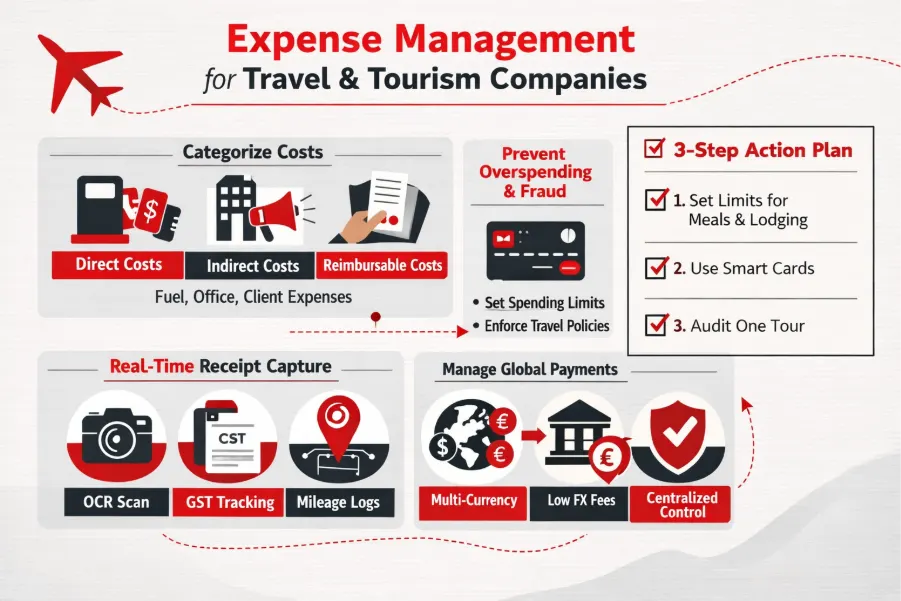
Running a travel business involves a constant stream of outgoing payments. Effective expense management relies on distinguishing between costs tied to a specific trip and general overhead. To get a clear picture of your finances, try sorting every outgoing rupee into one of these three buckets:
Direct Costs: Fuel, park entrance fees, and vendor payouts for a specific itinerary.
Indirect Costs: Office rent, marketing, and software subscriptions.
Reimbursable Costs: Items bought for a client, like an unplanned train ticket.
With OmniCard, this sorting is handled automatically. Our platform categorizes every transaction in real-time, providing cloud-based back-office clarity so you know exactly how much a trip earns versus what it costs.
Building Your Business Rulebook: How to prevent overspending and fraud
Knowing the difference between costs isn't enough if your team feels free to book five-star suites for routine trips. Streamlining corporate travel policy compliance acts as a rulebook that prevents awkward conversations later.
Many operators simplify daily expenses using per diems. Reducing per diem overspending is easier when you set flat rates based on the destination. To take it a step further, OmniCard Rupay Powered Corporate PPI Cards allow you to set predefined spending limits and category restrictions directly on the card. This gives your guides autonomy while ensuring they can't spend 10,000 on a 2,000 meal. Catching an out-of-policy expense before the swipe is far cheaper than trying to recover funds later.
Trading the Shoebox for the Cloud: Real-Time Receipt Capture
Moving from physical storage to expense reporting software transforms an overflowing shoebox into a tidy digital system. This process, known as digital reconciliation, turns hours of cross-referencing bank statements into a task that takes minutes.
Modern tools address the reality of tourism professionals who often work in remote areas. OmniCard allows guides to snap photos of receipts on the go. To get the most out of these it uses:
OCR (Optical Character Recognition): Automatically reads dates and amounts.
GST Compliance: Capturing state-wise GST details for easy input tax credit (ITC) claims.
Mileage Tracking: Using GPS to log exact routes for fuel reimbursements.
Mastering the Global Market: Multi-Currency and Cash Flow
When your team crosses borders, your budget often shrinks due to hidden banking fees. Traditional banks often charge a 3% transaction fee for every foreign payment. Switching to a centralized payment ecosystem helps bypass these repetitive fees.
Managing these variables is essential for optimizing cash flow for seasonal tourism businesses. By using integrated reporting and automated audit trails, you build a financial buffer that helps stabilize operations year-round.
Your 3-Step Action Plan to Modernize Your Travel Agency
Write the Rulebook: Set clear limits for meals and lodging today.
Deploy Smart Cards: Transition from cash/reimbursements to OmniCard Rupay PPI Cards for real-time control.
Audit one Tour: Use centralized data to check the financial health of a single trip.
Effective management turns financial blind spots into profit margins. Start small, and you will quickly swap tax-season panic for the peace of mind that comes with total control.
Book a Demo with OmniCard Today!