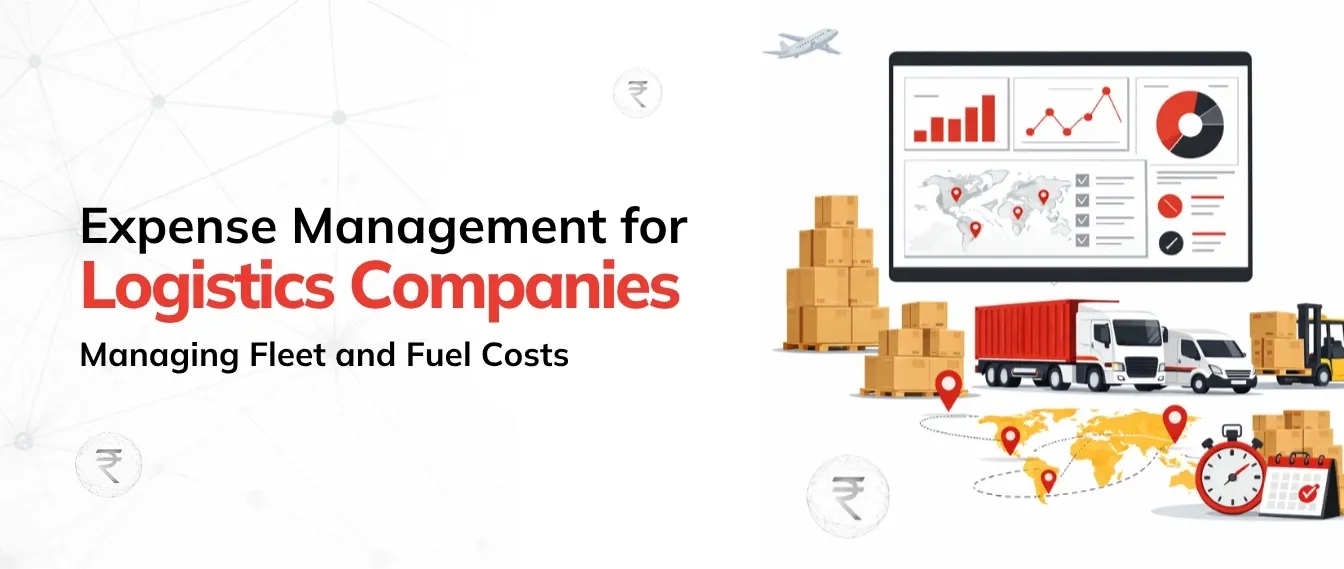
Expense Management for Logistics Companies Managing Fleet and Fuel Costs
Imagine filling a bucket with water, only to find tiny pinholes draining it dry. For many Indian fleet owners, daily operations feel exactly like this—where every idling engine at a toll plaza or a highway dhaba acts as a costly leak. Effective expense management for logistics resembles balancing a household budget; you cannot dictate the global price of crude oil, but you absolutely control your truck's consumption.
Using a unified spend platform like OmniCard allows you to see these leaks in real-time, moving away from reactive "damage control" to proactive financial health.

What to Expect From This Blog?
In this guide, we break down the mechanics of fleet profitability in the Indian context:
The "Hidden" Drains: Identifying where money disappears between the petrol pump and the warehouse.
Payment Tools: Comparing fleet cards vs. standard credit cards for better oversight.
Actionable Tactics: Simple habits and maintenance routines to slash fuel waste.
Modern Automation: How telematics and digital reporting (via OmniCard’s integrated dashboard) eliminate manual paperwork.

Most onlookers see trucks on the NH44 and think about cargo, but savvy managers see moving ledgers. To pinpoint financial leaks, successful operations measure their Cost per Kilometer (CPK) as a vital business health check. Tracking this metric separates fixed overhead, like permits and insurance, from controllable variables.
Protecting margins requires far more than simply paying invoices. In practice, smart cost reduction yields outsized returns. According to industry analysts, achieving just a 5% reduction in daily fleet expenses can equal a massive 20% increase in overall profit.
Beyond the Bill: What Are the Hidden Costs in Your Fleet?
True logistics cost control requires understanding Total Cost of Ownership (TCO). This combines the obvious price of diesel with maintenance and wear-and-tear. Think of it like a personal vehicle: you must budget for routine oil changes and brake pads, not just trips to the pump.
Common hidden costs in Indian fleet management include:
Empty Miles: Driving without a load (deadheading) burns fuel while earning zero revenue.
Engine Idling: Leaving a diesel engine running during driver rest stops or loading delays.
Under-inflated Tires: Our rough highway conditions make tire pressure critical; soft tires create massive drag.
Spotting these invisible expenses becomes much easier when you track driver purchases accurately. Digital solutions like OmniCard help by providing instant visibility into every rupee spent on the road, ensuring that unplanned costs don't stay hidden for long.
Fuel Card vs. Business Credit Card: Which Tool is Best for Trucking?
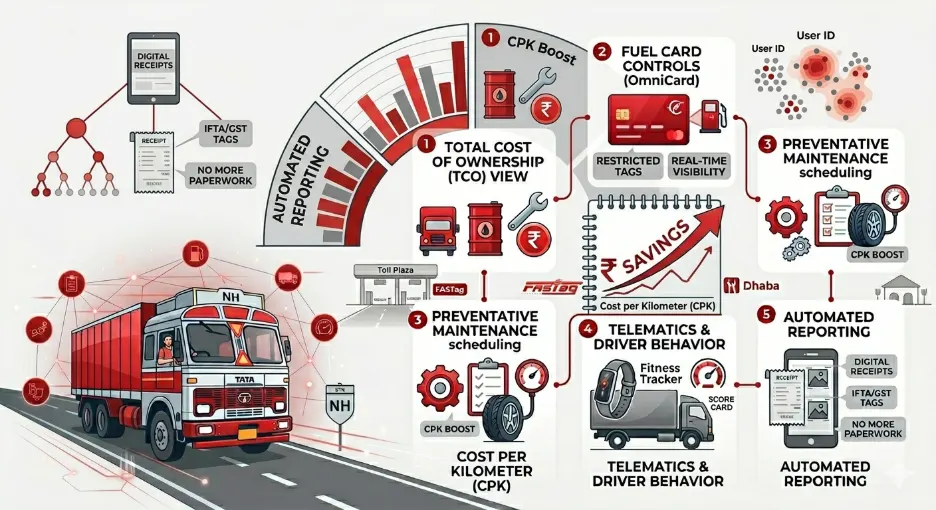
Standard cards offer generic rewards, but fleet-specific options—and versatile corporate platforms like OmniCard—capture Level 3 Data. This includes the driver ID, odometer reading, and exact fuel type.
This digital paper trail prevents fraud by instantly flagging if a driver tries to fill a personal vehicle on the company account. Beyond capturing data, you can apply strict merchant restrictions, ensuring the card only works at approved pumps while blocking inside convenience store purchases. This turns a messy shoebox of crumpled receipts into effortless, automated accounting.
How Can You Slash Fuel Waste Through Physical Habits?
A truck idling at a busy city intersection burns money. Adopting "no right turn" logic (to avoid long idling at signals) and optimizing route planning creates the smartest path, not just the shortest.
Beyond mapping, aerodynamics act like an invisible brake. Figuring out how to reduce fuel consumption often begins with mitigating drag. Additionally, maintaining a "sweet spot" speed—usually 60 to 70 km/h on Indian highways—maximizes mileage before wind resistance ruins efficiency.
The Daily Fuel-Saving Checklist:
Shut off engines: Power down during long loading waits or dhaba breaks.
Maintain speed: Avoid aggressive acceleration; stay in the 60-70 km/h sweet spot.
Monitor tires: Check pressure daily to eliminate rolling resistance.
Plan ahead: Use GPS to avoid traffic bottlenecks and unnecessary backtracking.
Does Preventive Maintenance Really Boost Fuel Efficiency?
Waiting for a breakdown on a highway is a reactive approach that drains profits through towing and lost time. A proactive Preventative Maintenance (PM) routine keeps vehicles operating smoothly; swapping a clogged air filter can improve fuel economy by up to 10%.
To measure these repairs, rely on the CPK metric. A healthy maintenance benchmark in India is roughly ₹8 to ₹12 per kilometer depending on the vehicle size. If your bills consistently push past this, investigate your shop invoices for hidden fees. Transitioning to a digital ecosystem like OmniCard allows you to categorize these costs instantly.
Can Telematics Act as a "Fitness Tracker" for Your Trucks?
Telematics uses GPS and onboard diagnostics to act as a fitness tracker for your fleet. While a well-maintained engine saves money, the person behind the wheel ultimately controls your daily consumption.
Software that tracks speed and braking creates a driver "fitness score":
Fuel Burn: Identifies exactly where a truck is idling too long.
Wear and Tear: Spots harsh braking that leads to premature brake replacements.
Risk Management: Uses documented safe driving habits to lower insurance premiums.
Is Automation the End of the "Shoebox of Receipts"?
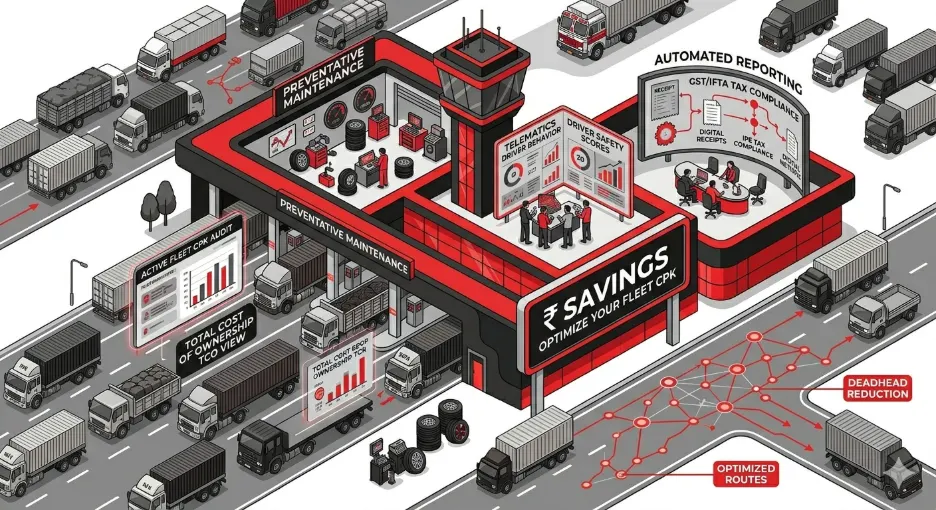
Relying on paper slips from petrol pumps guarantees lost money and frustrated staff. Adopting digital receipt management solves this instantly, letting drivers use mobile apps to snap photos of their purchases.
Syncing these tools with company fuel cards creates a highly accurate, audit-proof record. Using integrated mobile apps ensures every rupee is automatically tracked, saving administrators hours of tedious work every month.
What is the Roadmap to Stop Your Financial Bleeding?
You no longer need to view fleet expenses as unpredictable leaks.
Proactive Action Plan:
Audit CPK: Calculate exactly what one kilometer costs your business today.
Review Payments: Use a platform like OmniCard to set strict spend limits and category controls.
Check Maintenance: Schedule basic tire and fluid inspections for every vehicle this week.
Digitize: Move away from cash to eliminate "dummy" expenses and leakage.
Frequently Asked Questions (FAQs)
- How is OmniCard better than a standard bank account?
Unlike basic bank accounts, OmniCard provides granular control. You can set individual driver limits, restrict spending to fuel or tolls only, and track every rupee in real-time to prevent unauthorized use.
- How do I reduce "empty miles"?
Use route optimization and real-time GPS tracking to find backhaul loads. This ensures your truck earns revenue on the return trip instead of burning fuel for zero gain.
- Why track Cost per Kilometer (CPK) instead of total fuel?
Total fuel only shows what you spent; CPK shows how efficiently you spent it. A rising CPK flags issues like excessive idling or poor maintenance, even if your total fuel bill stays the same.
- Can digital receipts help with tax audits?
Yes. Faded paper receipts are often rejected. Digital captures are timestamped, geotagged, and stored securely, providing an audit-proof trail for GST and income tax compliance.