Choosing the Right Corporate Card: 5 Non-Negotiable Features for Modern Indian Enterprises
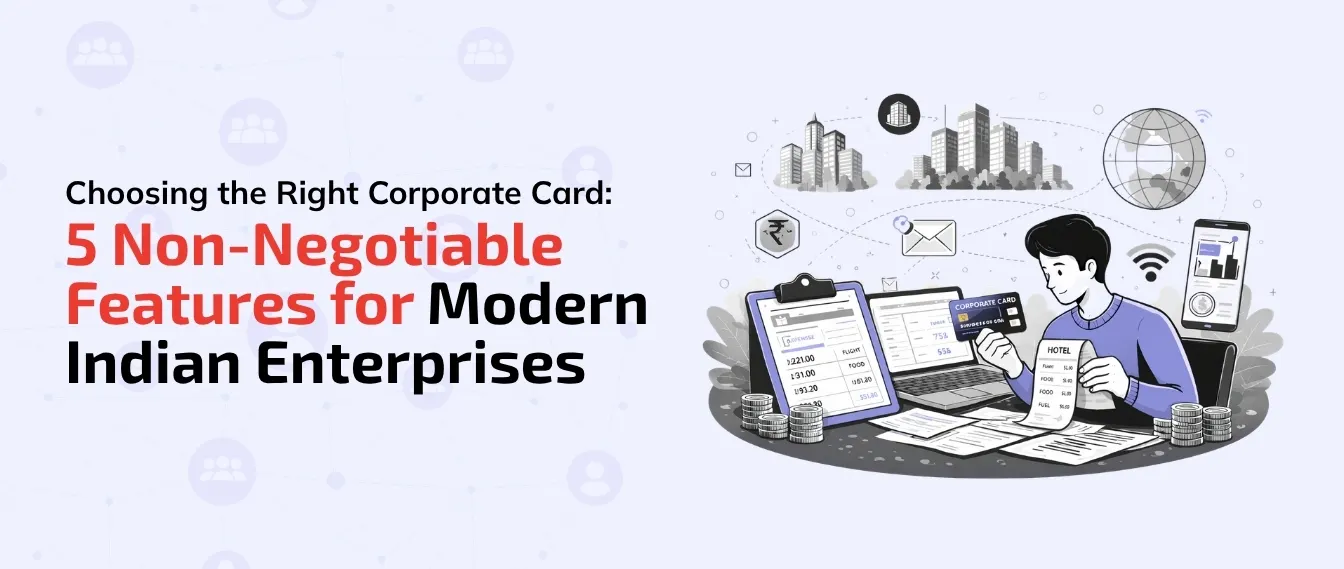
It’s month-end, and you are squinting at faded receipts, desperately matching team expenses to a personal bank statement. While seemingly convenient, industry data reveals this habit dangerously blurs personal and corporate liability, exposing founders to unnecessary legal and regulatory risks. In practice, this commingling also creates silent revenue leakage. Using personal accounts for company purchases forfeits your GST Input Tax Credit (ITC)—the standard tax refund allowed on valid business expenses. Without automated GST capture, you are essentially leaving 18% of your capital on the table.
What to Expect From This Blog?

In this guide, we dive deep into how Indian enterprises can move from manual chaos to automated efficiency using tech-first corporate payment solutions. You will learn:
How to decentralize budgets using virtual cards while maintaining 100% oversight.
Strategies to eliminate "subscription creep" and unnecessary domestic spending leaks.
The mechanics of connecting your card spend directly to Tally or Zoho.
How to implement multi-level approvals to stop being a bottleneck in your own company.
A 30-day roadmap to audit your current corporate card features for maximum efficiency.
1. The Power of Virtual Cards: Distributed Budgets Without the Risk

Handing your primary company credit card to a junior employee or sharing OTPs across WhatsApp groups is a security nightmare. Modern corporate payment solutions solve this by letting you generate digital "virtual" versions of your main account.
These cards live on your phone or laptop and are designed for specific, controlled tasks. By using a platform like OmniCard, you can issue these instantly to any department head or team member.
Why Virtual Cards are a Game-Changer for Indian Teams:
Purpose-Driven Spending: Create a unique card exclusively for your Ads account or your local cloud hosting provider.
Hard Budget Caps: If you authorize ₹20,000 for a marketing campaign and the platform attempts to charge ₹20,001, the transaction is automatically declined.
Instant Lifecycle Control: You can freeze or delete a card the moment a project ends, without affecting any other company payments.
Security First: No more sharing the 16-digit number of your primary bank account with external agencies or vendors.
High-Impact Use Cases:
Digital Marketing: Capping Facebook, LinkedIn, and Google ads to prevent accidental overspending.
Vendor Management: Paying one-time Indian vendors without exposing your main bank details.
Operational Predictability: Handling recurring utility and office bills with auto-expire dates.
Petty Cash: Giving office managers specific digital budgets for pantry or stationery supplies.
2. Solving the "Leakage" Problem: Plugging Domestic Revenue Drains
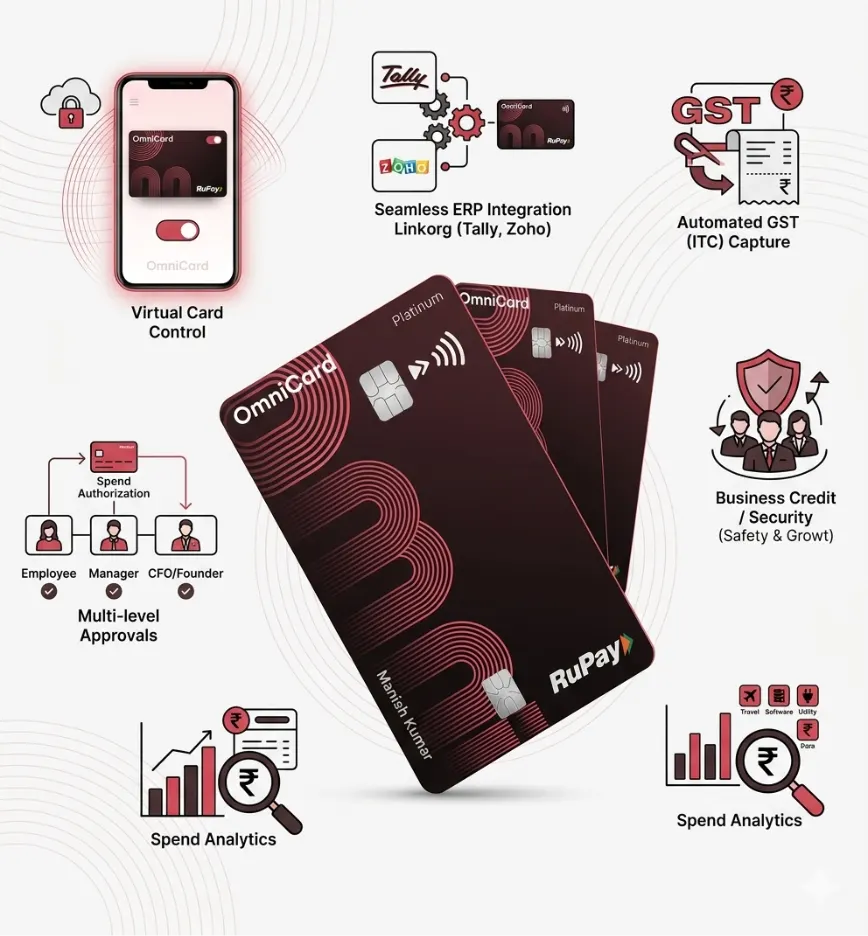
While many founders focus on big-ticket items, revenue often leaks through small, unmonitored domestic transactions. Every time an employee uses a personal card for a business purchase and forgets to submit a receipt, the company loses money—not just the expense amount, but the 18% GST credit that could have been reclaimed.
How Modern Corporate Card Features Protect Your Capital:
Automated GST Capture: Unlike personal cards, OmniCard captures vendor GSTINs at the point of purchase, ensuring you never miss an ITC claim.
Subscription Auditing: Identify and cancel "ghost" subscriptions for Indian software or services that are no longer being utilized by the team.
Merchant Category Blocking: Restrict cards so they only work at specific types of merchants, such as "Travel" or "Office Supplies," preventing non-business expenses.
The Math of GST Savings:
Monthly Business Spend: ₹5,00,000 via personal cards (No GST captured).
Monthly Business Spend: ₹5,00,000 via OmniCard (Full GST captured).
The Difference: You effectively "save" or reclaim ₹90,000 every single month that would otherwise be lost to the tax man.
3. From Tally to Zoho: Why Seamless ERP Integration is Essential
We’ve all witnessed the dreaded month-end panic where finance teams chase managers for faded receipts and invoices. This manual data entry isn't just frustrating; it leads to accounting errors that can be expensive during a tax audit.
Adopting seamless ERP integration for corporate spending allows your business cards to "talk" directly to the software you already use.
The Benefits of Automated Accounting:
Instant Ledger Entry: A purchase at a local hardware store instantly drops into your 'Maintenance' ledger in Tally.
Real-Time Reconciliation: Instead of waiting for a monthly bank statement, your books stay updated in real-time.
Digital Receipt Attachment: Employees can snap a photo of a physical receipt via the app, which is then automatically linked to the transaction in Zoho.
Audit Readiness: Having a digital trail for every rupee spent makes internal and external audits significantly smoother.
4. Multi-Level Approvals: Stop Being the Bottleneck
Imagine personally authorizing every single ₹1,000 travel reimbursement or stationery purchase. For a founder, this is a poor use of time. Modern corporate payment solutions mirror your company’s hierarchy, allowing you to delegate spend authority safely.
Setting Up a Digital Approval Workflow:
Employee Level: Requests a budget of ₹5,000 for a specific task via the app.
Manager Level: Approves the request instantly for amounts up to ₹10,000.
Finance/Founder Level: Only gets involved for high-value purchases exceeding a set threshold.
By implementing this via OmniCard, you eliminate the "cash box" in the office drawer and replace it with a transparent, digital system that routes requests automatically based on your rules.
5. Your 30-Day Roadmap: Choosing a Card That Scales
Moving to a modern system is easier than most founders think. By treating your card as a Financial Operating System rather than just a piece of plastic, you transition to business-based credit that grows with your enterprise.
The Readiness Audit:
Check Liability: Are you still using cards that hold the founder personally liable?
Review Visibility: Can you see exactly how much your sales team has spent today, or do you have to wait for the statement?
Audit GST: Look at your last statement—how many entries are missing the vendor's GST details?
Test Controls: Can you instantly lower the limit on a specific card from your mobile dashboard?
Evaluate these corporate card features against your current setup. Pull your last three statements today to identify how many hours your finance team spends on manual entry. By plugging these leaks with a platform like OmniCard, you aren't just changing how you pay; you are optimizing your working capital for the next stage of your growth.
Key Takeaways
Decentralize with Virtual Cards: Give teams the budgets they need without exposing your primary bank account or sharing OTPs.
Reclaim Your GST: Stop losing 18% on every purchase; use automated capture to ensure every eligible rupee is returned via Input Tax Credit.
Sync Your Accounting: Eliminate manual data entry by choosing a card that integrates directly with Tally and Zoho.
Enforce Spend Policies: Use merchant locks and hard spend caps to ensure company money is only spent on company business.
Protect the Founder: Move away from personal liability cards to professional corporate solutions that reflect the health of the business.
FAQs
- What are the most important corporate card features for Indian SMEs?
The top features are real-time spend tracking, the ability to issue instant virtual cards for different departments, and seamless integration with Indian accounting software like Tally.
- How do corporate payment solutions improve GST compliance?
Platforms like OmniCard allow you to record and verify vendor GSTINs at the time of purchase. This ensures your finance team has all the data needed to claim Input Tax Credit accurately, which is often impossible with personal card statements.
- Can I use these cards for my field sales team?
Yes. You can issue cards with specific travel and meal limits. If a team member exceeds their budget or tries to spend at an unauthorized merchant, the transaction is blocked, and you are notified instantly.
- Does switching to a corporate card require a personal guarantee?
Modern solutions often offer cards based on the company's operational history and cash flow, allowing founders to separate their personal credit scores from the business's financial activities.
- How long does it take to set up a virtual card for a new employee?
With OmniCard, you can issue a virtual card to an employee's mobile app in seconds, allowing them to start making authorized business purchases immediately.